Guide · Plan the trip
How to plan a trip to Japan, step by step
Plan in this order: when, how long, entry, money, transport, where to stay, connectivity and safety. Each step gives the key fact and its guide.
Plan a Japan trip in this order: dates, length, entry, money, transport, where to stay, connectivity and safety. Dates come first because holidays, snow and closures set prices and what is open, and every later step depends on them. Several rules moved in 2026, and a table after the steps lists them.
Dollar figures use about ¥155 to US$1 and are rounded; you pay in yen, so check the rate.
Step 1: When should you go?
Pick dates first, because weather, holidays and closures differ by city and by week. Tokyo averages 5.4 °C in January and 26.9 °C in August, Sapporo averages -3.2 °C in January, and Naha never averages below 17 °C, per Japan Meteorological Agency normals for 1991 to 2020.
The Golden Week holidays in 2027 fall on 29 April and 3 to 5 May, and September 2027 has no Silver Week run. Many sights, shops and restaurants close on some days between 29 December and 4 January, and several JR trains are all-reserved from 25 December 2026 to 5 January 2027. Temples and shrines generally stay open. Obon is not an official holiday, but JNTO describes mid-August as a family holiday period when many people travel.
Read When to visit Japan for the month-by-month table and Japan New Year closures 2026-27 for what shuts.
Step 2: How long should you stay?
A week covers Tokyo and Kyoto, two weeks add Nagano and Osaka, and three weeks add Hokkaido. The Japan Tourism Agency’s 2025 survey averages 9.5 nights per visitor and 7.1 nights for leisure visitors.
Distances from Tokyo set the pace. Nagano is 80 to 120 minutes by Shinkansen, Kyoto about 2 h 10, Fukuoka about 4 h 50, Hiroshima about 3 h 54 by Nozomi, Sapporo about 1.5 hours by air and Naha about 2 h 10 to 20 by air from Haneda. Islands change the sum: the ferry to the Ogasawara Islands takes about 24 hours and runs roughly one round trip a week.
Japan itineraries for 1, 2 and 3 weeks gives a stop-by-stop table for each length and says what each route leaves out. For weekday work and weekend snow, Weekday in Tokyo, weekend in the mountains lists train times from about 65 minutes to Karuizawa to about 3 hours to Hakuba. Regions and islands are in the Destinations hub.
Step 3: What does entry require?
Most visa-exempt passports get up to 90 days, for tourism only. Indonesia and Thailand get 15 days, Brunei and Qatar 30, and seven passports can extend to 6 months by application only, per a snippet of the Ministry of Foreign Affairs list. Visa-exempt tourists pay no visa fee.
Japan Customs recommends Visit Japan Web for the declaration, and paper forms are still accepted on the plane and at Customs. Declare cash, cheques or securities above $6,450 (¥1,000,000). Each adult may bring 3 bottles of alcohol of about 760 ml each, and 200 cigarettes or 50 cigars or 250 g of other tobacco, duty free.
JESTA, the planned travel authorisation, is not live and has no confirmed start date or fee, so treat any site selling it as unofficial. The border steps are in Entering Japan: visa stay, customs and Visit Japan Web.
Step 4: How should you handle money?
Price the trip line by line, set up an IC card and carry some cash. The Japan Tourism Agency’s 2025 survey averages $1,480 (¥229,000) per visitor per trip over 9.5 nights. That is an average, not a budget. How much a trip to Japan costs sets the average beside the confirmed prices.
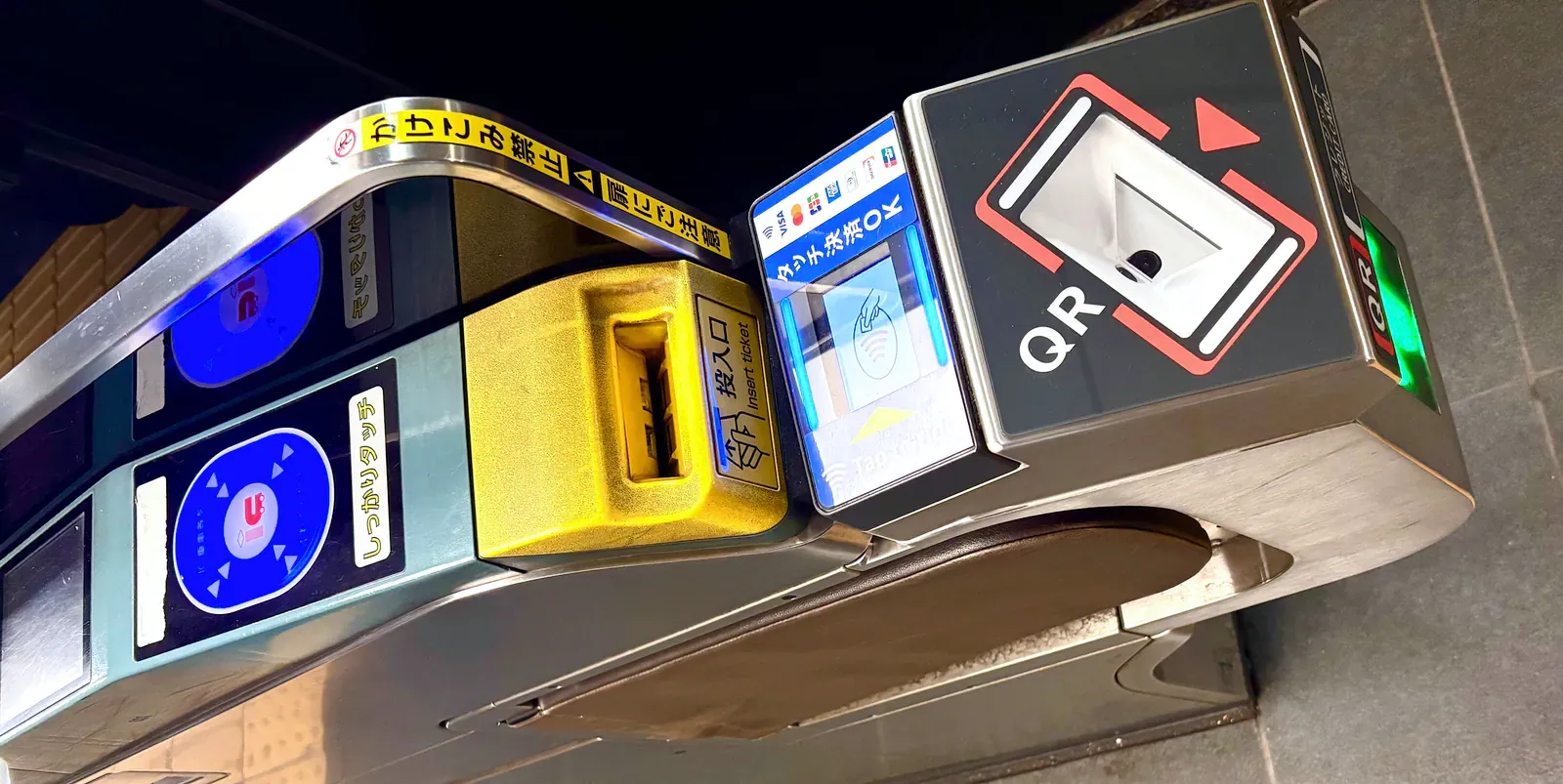
With an iPhone, set up Welcome Suica Mobile before you fly: 180 days, no deposit. Otherwise buy TOURIST PASMO at Narita or Haneda: 28 days, no deposit, and unused value is not refunded. Kyoto City Tourism Association says many purchases and temple admission fees can only be paid in cash, and clinics are usually cash only. Cash, IC cards and eSIM in Japan has the detail.
From 1 Nov 2026, tax-free shopping is pay then refund. Spend at least $32 (¥5,000) before tax at one store in one day, leave within 90 days, and scan your passport at the tax-free terminal before you check bags. Japan tax-free shopping from 1 November 2026 lists the steps. The departure tax is $19 (¥3,000) per departure, added to your ticket.
Step 5: How do you get around?
Test a JR Pass against single fares before you buy. A 7-day Standard adult pass costs $325 (¥50,000) on the official online service and $340 (¥53,000) at overseas agencies for purchases from 1 Oct 2026. The online price has no announced end date, and advance seat reservations work only if you bought the pass on the official site.
On JR Central lines, a bag up to 160 cm total (length plus width plus height) needs no reservation. A bag from 161 to 250 cm needs a seat with the oversized-baggage area reserved at booking, or a $6 (¥1,000) fee. Over 250 cm is not allowed. Regional passes changed too: the JR EAST PASS replaced the Tohoku Area Pass on 14 Mar 2026, the East-South Hokkaido Pass is $260 (¥40,000) for 6 days, and the paper Kansai Area Pass ended on 30 Sep 2026.
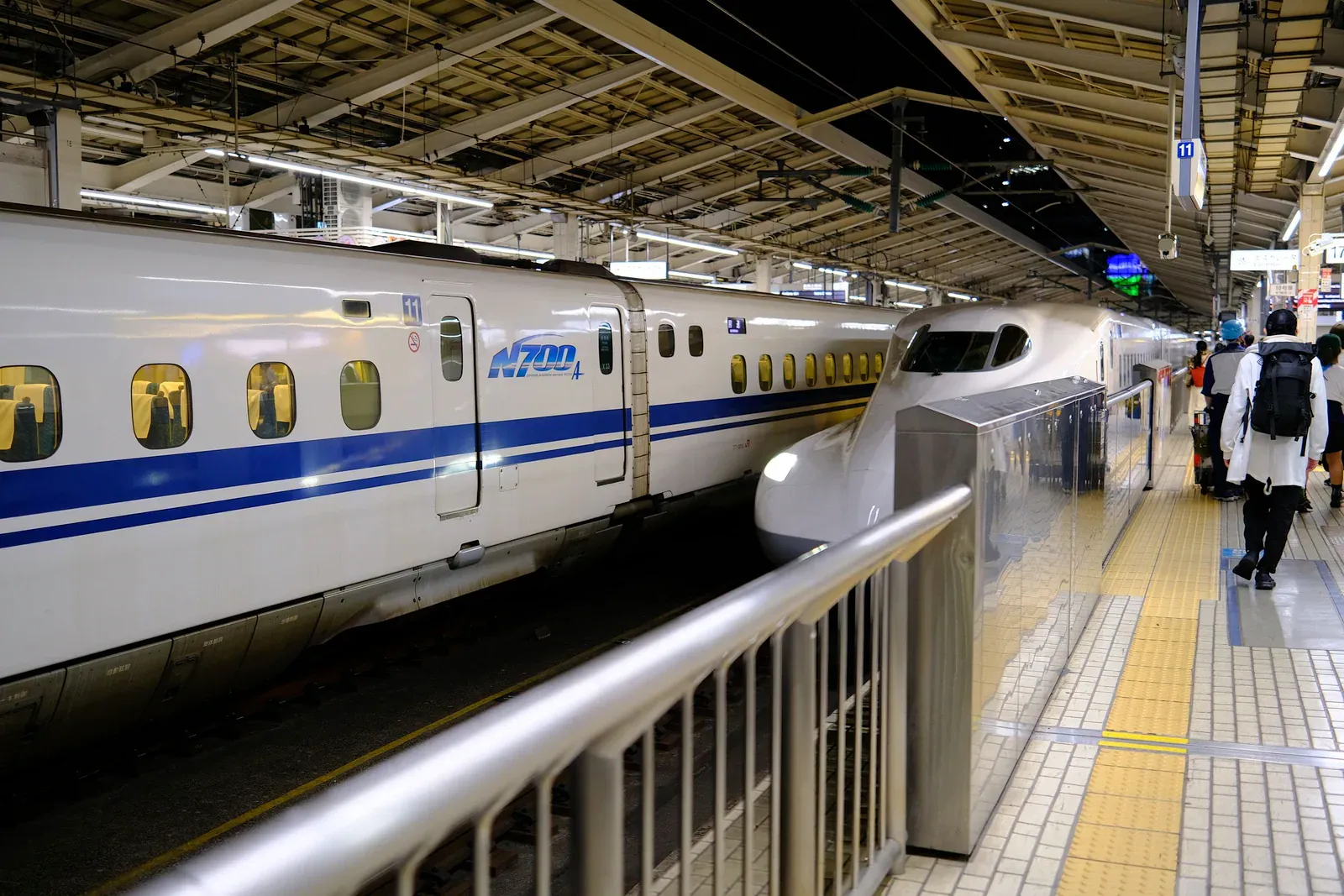
For airport trains, the Keisei Skyliner takes as little as 41 minutes from Narita to Keisei-Ueno, the Tokyo Monorail 13 minutes from Haneda to Hamamatsucho, and Nankai’s Rapi:t as little as 34 minutes from Kansai Airport to Namba. Several fares are unresolved, so confirm each with the operator. Read the Shinkansen and JR Pass guide and Airport transfers in Japan.
Step 6: Where should you stay?
Hotel tax is charged per person per night on the room-only price, and each city sets its own. Kyoto charges $1 to $65 (¥200 to ¥10,000) since 1 Mar 2026 and Osaka $1 to $3 (¥200 to ¥500) since 1 Sep 2025. Tokyo moves to 3% on 1 Apr 2027, and Okinawa starts 2%, capped at $13 (¥2,000), on 1 Feb 2027.
Private rentals, called minpaku, may operate 180 days or fewer a year, and local ordinances can restrict them further. Hotels ask guests without a Japanese address for a passport, and a 2014 health ministry notice tells operators to keep a copy. A hotel-data report puts Kyoto’s average room rate in May 2026 at $295 (¥45,700) against $180 (¥27,900) in Osaka, though the Japan Tourism Agency pages give no room rate. A ryokan rate usually includes dinner and breakfast, so arrive by about 17:00 if dinner is included.
Hotel taxes in Japan and where to stay has the tax bands and area picks, and Staying in a ryokan has the inn rules.
Step 7: How do you stay connected?
A data-only eSIM from povo is the one option with a confirmed price list. In the 2025 listing, 1 GB over 3 days cost $2 (¥300) and 20 GB over 30 days cost $17 (¥2,700). The 2026-27 prices are unclear right now, so treat these as last known.
povo says its visitor eSIM activates without identification documents. Some secondary reports describe stricter checks for data-only SIMs from 1 Apr 2026, so confirm on povo’s page. The eSIM carries data only and has no phone number, and every plan ends within 30 days, so a longer stay means buying again. povo says speeds may be limited when the network is congested. About 14,600 LAWSON stores sell visitor plans for cash, with a different lineup from the online one.
Wi-Fi, SIMs and eSIMs for remote work in Japan has the price table and the gaps.
Step 8: How do you stay safe and covered?
Call 110 for the police and 119 for an ambulance or fire. Both are free and open 24 hours. The JNTO Visitor Hotline, 050-3816-2787, answers 24 hours in English, Chinese, Korean and Japanese. The Tokyo Metropolitan Police English helpline, 03-3501-0110, also runs 24 hours. JNTO describes Japan as very safe, with low crime, so most of the preparation is manners and cover. JNTO’s Safety Tips app sends quake and tsunami alerts in Japanese, English, Chinese and Korean.
Travel insurance is not compulsory, but the Ministry of Health, Labour and Welfare strongly recommends private health insurance. JNTO’s medical guide quotes $48,390 (¥7.5 million) for a 19-day case and $64,520 (¥10 million) for a 45-day case. Both are old figures from an insurer’s assistance company. Clinics are usually cash only, so look for cashless service.
In an earthquake, stay calm and follow staff, learn the evacuation routes at check-in, put out open flames, and move to higher ground after a large quake near the coast. Read Japan safety and etiquette and Travel insurance for Japan.
Which rules moved in 2026?
Most of the 2026 changes add a cost, and tax-free shopping adds a step at the airport. Visa-exempt tourists pay no visa fee.
| Change | From | What it means |
|---|---|---|
| JR Pass price | 1 Oct 2026 | 7-day Standard adult $340 (¥53,000) at overseas agencies, $325 (¥50,000) online for now |
| Departure tax | 1 Jul 2026 | $19 (¥3,000) per departure, added to the ticket |
| Tax-free shopping | 1 Nov 2026 | Pay the tax, then claim it back at departure within 90 days |
| Visa fee | 1 Jul 2026 | About $97 (¥15,000) single entry, only if you need a visa |
| Kyoto hotel tax | 1 Mar 2026 | $1 to $65 (¥200 to ¥10,000) per person per night |
| Hokkaido hotel tax | 1 Apr 2026 | $1 to $3 (¥100 to ¥500) by room rate |
| Nagano hotel tax | 1 Jun 2026 | $1 (¥200), none under $39 (¥6,000) |
| Subway Ticket | 14 Mar 2026 | 24 hours $6 (¥1,000), 48 hours $10 (¥1,500), 72 hours $13 (¥2,000) |
| Kansai Area Pass | 30 Sep 2026 | Paper pass ended; earlier purchases stay valid |
| Shikoku pass | 1 Oct 2026 | 3 days $77 (¥12,000), 7 days $130 (¥20,000) |
| Okinawa hotel tax | 1 Feb 2027 | 2% of the room charge, capped at $13 (¥2,000) |
| Tokyo hotel tax | 1 Apr 2027 | 3% of the room-only charge, none below $84 (¥13,000) |
The visa fee comes from a snippet of the official fee page, so ask your embassy for the amount. What changed in Japan for travellers in 2026 adds who each change hits, the regional rail passes and the JESTA status.
Can you stay longer or work remotely?
Remote work needs the nomad status, formally Designated Activities, because a tourist stay is for tourism only. It allows up to 6 months, no extension and no residence card, with income of at least $64,520 (¥10 million) a year and private medical insurance. Japanese clients are excluded. Japan’s digital nomad visa sets out the rules.
For desks, Coworking in Japan lists operators’ own prices: from $14 (¥2,200) a day in Fukuoka and from $350 (¥54,000) a month for Tokyo memberships. A standard lease typically takes 4 to 7 months of rent before you move in, per Renting a flat in Japan: upfront costs. Connectivity is in Step 7, and mountain towns are in Weekday in Tokyo, weekend in the mountains.
What about food and specific questions?
Plan meals in Food: how to order, what a meal costs, tipping and tax, and diet needs. For a yes, no or depends on a specific question, such as tattoos in an onsen, medication or remote work, use Get answers.
Where next?
Start with the dates in When to visit Japan, then draw the route in Japan itineraries for 1, 2 and 3 weeks. Every planning page is in the Plan hub.
Questions
Dates first, then length, entry, money, transport, where to stay, connectivity and safety. Dates set the weather, holidays and closures, and every later step depends on them.
The departure tax rose to $19 (¥3,000) on 1 Jul 2026, JR Pass prices at overseas agencies rose on 1 Oct 2026, tax-free shopping becomes pay-then-refund on 1 Nov 2026, and Kyoto, Hokkaido and Nagano added or raised hotel taxes. Visa-exempt tourists pay no visa fee.
Most visa-exempt passports get up to 90 days, for tourism only. Indonesia and Thailand get 15 days and Brunei and Qatar 30, per a snippet of the Ministry of Foreign Affairs list. Check your own passport on that list.
The Golden Week holidays fall on 29 April and 3 to 5 May 2027. Many sights, shops and restaurants close on some days between 29 December and 4 January.
It is not compulsory, but the health ministry strongly recommends private cover. JNTO quotes medical bills of $48,390 (¥7.5 million) and $64,520 (¥10 million), and clinics are usually cash only, so look for cashless service.