Destination · Japow
Hakuba Valley: which of the 10 resorts suits you
Ten resorts on one $72 (¥11,100) day pass, reached from Tokyo by train and bus. Which resorts have gates, what the pass allows and who it suits.
Hakuba Valley puts ten resorts on one pass, $72 (¥11,100) a day, and you reach it from Tokyo without a flight: about 80 minutes by Shinkansen to Nagano, then about 70 minutes by bus. Five of the ten resorts have backcountry gates and the other five prohibit it, per the valley’s safety page.
Dollar figures use about ¥155 to US$1 and are rounded; you pay in yen, so check the rate.
Is Hakuba right for you?
Best for
- Steeper, longer runs: one secondary comparison guide puts Hakuba ahead of Niseko for advanced skiers.
- A Tokyo trip with no flight.
- Skiing several resorts on one pass, on days that need not be consecutive.
- Epic holders, who get one free 5-day ticket.
- Beginners at Tsugaike, where one guide describes a beginner slope about 1,200 m wide.
Not for
- Ikon holders: Hakuba is not on Ikon.
- Anyone who might lose ski days to poor snow: unused pass days are void, with no refund.
- Night skiers: the valley pass and its shuttle exclude night skiing.
- Travellers who want the least language friction: that comparison guide rates the barrier somewhat higher than Niseko’s, though one guide notes many English-friendly bars and shops at Happo.
How do you get from Tokyo to Hakuba?
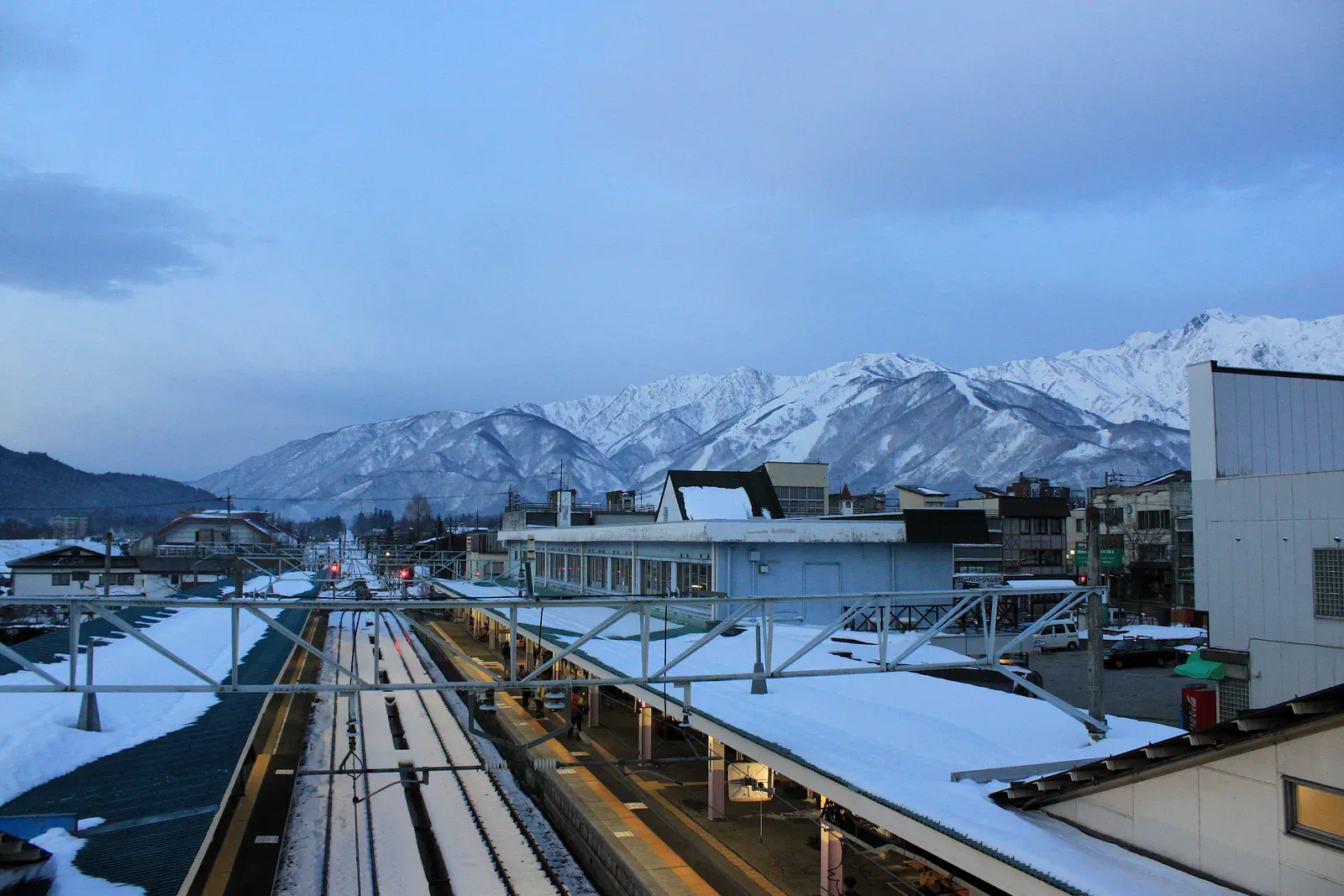
Take the Hokuriku Shinkansen to Nagano, about 80 minutes on the fastest train, then the Alpico express bus to Hakuba, about 70 minutes. The Shinkansen costs about $50 to $55 (¥7,700 to ¥8,500) one way, depending on the source. In 2025-26 the Alpico express from Nagano to Hakuba cost $23 to $25 (¥3,500 to ¥3,800) one way, by stop and season, per the operator timetable; the 2026-27 fare is unclear right now.
A Japan Rail Pass covers the Shinkansen, but Alpico is a private line, so budget the bus separately. The pass question is worked through in Can I use a JR Pass for Tokyo, Hakuba and Kyoto?
A direct highway bus from Shinjuku takes about 5 hours. In 2025-26 it cost $41 to $50 (¥6,400 to ¥7,800) one way per the operator timetable; the 2026-27 timetable is unclear right now. One guide says New Year and February weekends sell out.
What does the Hakuba Valley pass cost in 2026-27?
One adult day is $72 (¥11,100) across all ten resorts. The pass goes on sale around November at the official webshop, by Visa or Mastercard only.
| Adult (13+) | Price | Use within |
|---|---|---|
| 1 day | $72 (¥11,100) | the day |
| 2 days | $140 (¥21,800) | 4 days |
| 3 days | $210 (¥32,200) | 6 days |
| 5 days | $345 (¥53,400) | 10 days |
| 7 days | $480 (¥74,500) | 12 days |
| 10 days | $685 (¥106,100) | 16 days |
Children aged 6 to 12 pay $41 (¥6,400) for a day. Under 6s are free (under 3s at Jigatake and Kashimayari). A free shuttle runs on ski days, and a shuttle-only day still counts as a day.
Five Hakuba days cost $345 (¥53,400), about 18% less than five Niseko peak days at $425 (¥65,500). The 10-day pass averages $68 (¥10,610) a day against $72 (¥11,100), a saving of about 4%, so buy it for the flexibility, not the discount. See Passes & prices for the full comparison and Gear & rental for the kit.
Epic holders get one free 5-consecutive-day ticket for all ten resorts, with no blackout and no night skiing. You need the physical card and photo ID, since a mobile pass cannot ride the lifts. Epic lodging and dining discounts do not apply in Hakuba. The Hakuba page names Epic, Epic Local and Epic Australia, and the Epic partner page lists lifetime and adaptive passes too, so confirm your pass type with Vail Guest Services before you arrive.
Which of the 10 resorts is for you?
Gates decide more than terrain: five resorts have them (the first four rows and Norikura Onsen) and the other five prohibit backcountry access.
| Resort | Backcountry gates | Top / vertical drop | Notes |
|---|---|---|---|
| Happo-One | Yes | 1,831 / 1,071 m | Biggest drop of the five resorts with listed figures |
| Tsugaike | Yes | 1,704 / 904 m | Broad beginner slope; no night skiing in 2026-27 |
| Goryu | Yes | 1,676 / 926 m | Opens 21 Nov, per one guide |
| Cortina | Yes | 1,402 / 530 m | Snowiest reputation in the valley |
| Norikura Onsen | Yes | not found | No other data |
| Iwatake | No | 1,289 / 539 m | Backcountry prohibited |
| Jigatake, Kashimayari, Sanosaka | No | not found | Backcountry prohibited |
| Hakuba47 | None of its own | 794 m (valley table) | Gates are reached through Goryu terrain |
Verticals come from one operator guide, except Hakuba47’s, which is from the valley’s table. Level is sourced only for Tsugaike (beginner) and Happo-One (big drop).
The valley’s safety page lists Hakuba47 as no-gate, but the resort’s own page describes designated gates reached through the Line-E lift or Goryu’s Alps 4th lift. Treat Hakuba47 as having no gate of its own, and see Hakuba Goryu and Hakuba47 for details.
What do the Hakuba backcountry rules say?
Backcountry access is allowed only at the five gated resorts and prohibited at the other five.
Safety At a gated resort you must register and carry a transceiver, probe and shovel. Never go alone.
From the official safety page:
- Submit the Mountain-Climbing Registration Form before you buy tickets, in person or online.
- Check the Nagano avalanche information daily. At danger level 3, inexperienced skiers should stay in bounds.
- A guide is advised for inexperienced skiers, ideally an IFMGA-recognised guide through the Japan Mountain Guides Association. It is not stated as mandatory.
- If you are rescued, you pay private rescue costs. The page gives no figure. Emergency numbers are 110 for police and 119 for fire and ambulance.
Details are in Backcountry & safety. Related: Can I ski off-piste in Japan without a guide?
Is the 2026-27 snow looking good?
The 2026-27 outlook for Honshu is weaker than for Hokkaido. The Japan Meteorological Agency’s September outlook gives Honshu’s Sea of Japan side a 50% chance of below-normal snowfall (unconfirmed figures), and a snow-forecast site rates Honshu below average to average. The valley normally gets about 10 to 12 m a year, and one guide says Hakuba is busiest from New Year to February. Some guides call its snow heavier than Hokkaido’s; no measurement backs that.
Before you book Unused pass days are void with no refund, so pick your 10-day window against the forecast.
Ride & Soak card
- Thrill: Happo-One, the biggest listed drop among the valley resorts with figures, 1,071 m from a 1,831 m top (one operator guide).
- Soak: not found for the valley, so no bath, price, hours or tattoo rule is given.
- Meal: not found.
Where next?
Single-resort guides: Happo-One, Goryu and Hakuba47, Tsugaike and Cortina. Flying with your own gear? Read Can I fly to Japan with my own skis or snowboard?. Weighing the alternatives? Compare Niseko for easier terrain and English support, or Nozawa Onsen for a village with 13 public baths. Back to the Japow hub.
Quick answers
Is the Hakuba Valley pass worth it?
Yes if you want to move between resorts. One day is $72 (¥11,100) and five days are $345 (¥53,400) in any 10-day window, with days that need not be consecutive. Unused days are void, with no refund.
Which Hakuba resorts allow backcountry skiing?
The valley's safety page lists five with gates: Goryu, Happo-One, Tsugaike, Norikura Onsen and Cortina. At Jigatake, Kashimayari, Sanosaka and Iwatake it says backcountry access is prohibited, and it lists Hakuba47 the same way. Hakuba47's own page describes designated gates reached through Goryu terrain, so Hakuba47 has no gate of its own.
Can I get to Hakuba from Tokyo without flying?
Yes. The Hokuriku Shinkansen reaches Nagano in about 80 minutes on the fastest train, then the Alpico express bus takes about 70 minutes. The bus is a private line, so a rail pass may not cover it.
Does Epic cover Hakuba?
Yes, for one free 5-consecutive-day ticket valid at all 10 resorts, not for night skiing, on a physical card with photo ID. Hakuba is not on Ikon.