Destination · Japow
Nozawa Onsen: ski a village with 13 public baths
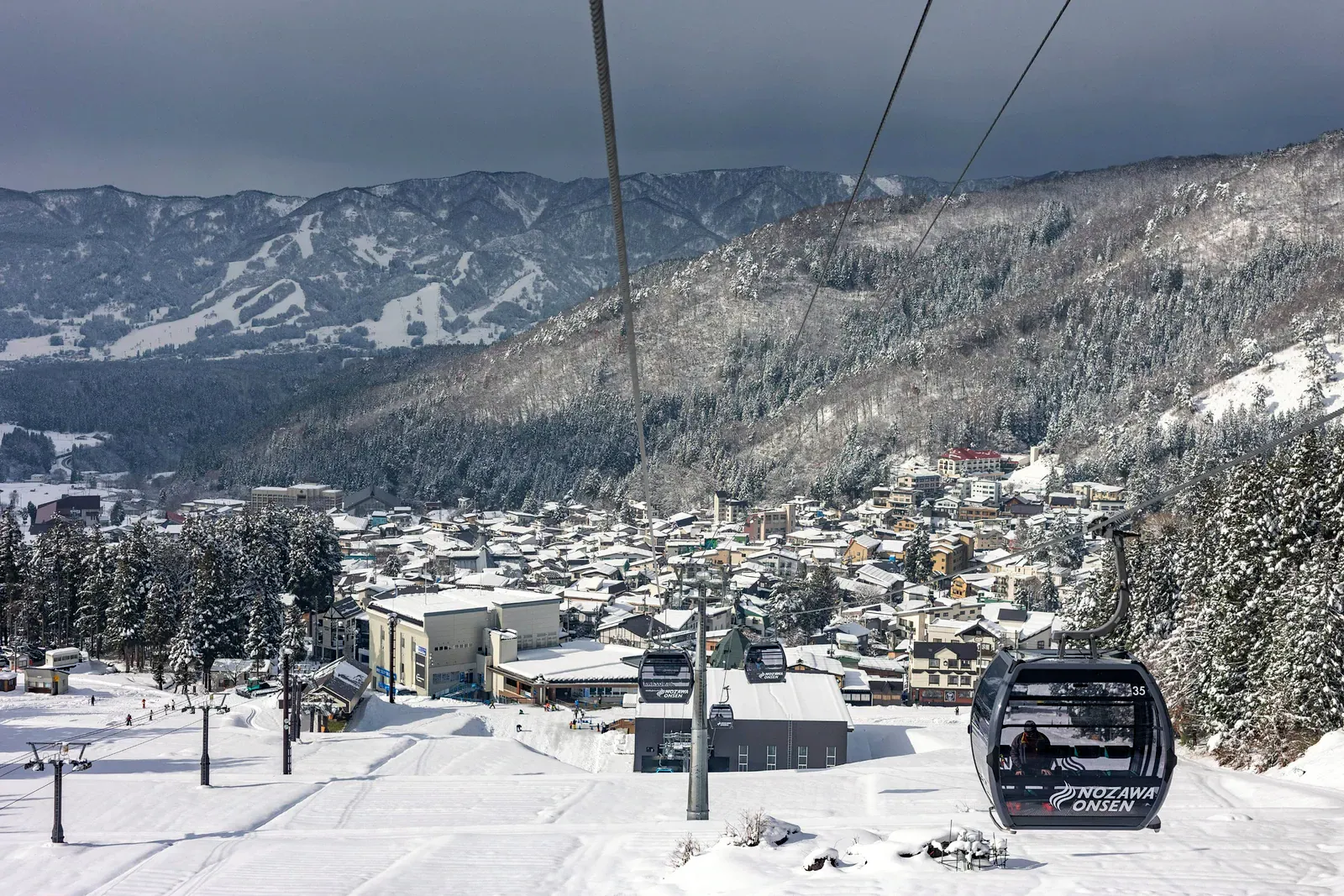
A ski village with 13 free public baths (a few villagers-only) and a $50 (¥7,800) day ticket, about 2 hours from Tokyo by train and bus.
Nozawa Onsen is a ski village with 13 public baths that are free to use (a few admit villagers only), and an adult day ticket of $50 (¥7,800) in the 2026-27 regular period (19 Dec 2026 to 28 Mar 2027). From Tokyo it takes one Shinkansen and a bus of about 25 minutes. It is on neither Ikon nor Epic, so you pay day-ticket prices.
Dollar figures use about ¥155 to US$1 and are rounded; you pay in yen, so check the rate.
How do you get from Tokyo to Nozawa Onsen?
Take the Hokuriku Shinkansen to Iiyama (about 100 minutes), then the Nozawa Onsen Liner (about 25 minutes, $4 (¥600), no reservation). One route database puts the whole trip at about 2 h 10 and $61 (¥9,490) one way. A Japan Rail Pass covers the Hakutaka Shinkansen; coverage of the Liner is unconfirmed. One guide mentions airport shuttles from Narita and Haneda without times or fares.
Who is Nozawa best for, and who should skip it?
Best for
- Ski days that end in a bath crawl.
- A Tokyo trip with no flight, no car and no transfer to book.
- Lower lift prices: $50 (¥7,800) is 42% under Niseko’s $87 (¥13,500) peak day and 30% under Hakuba Valley’s $72 (¥11,100) one-day pass, which covers ten resorts (calculated from the official prices).
Not for
- Ikon or Epic holders: Nozawa is on neither.
- Off-piste plans built around gates: there are two, and they are not installed in low-snow periods.
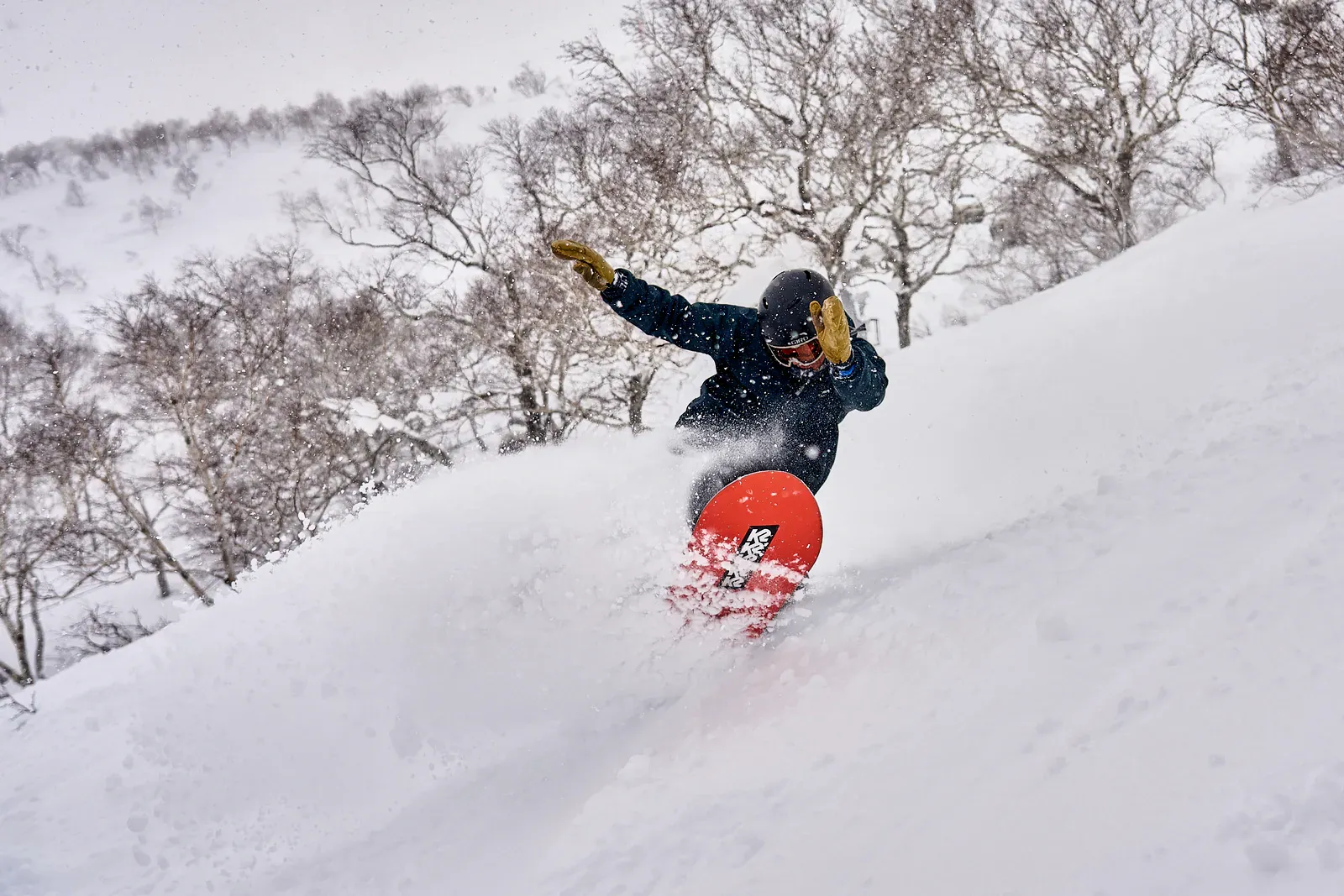
- Deep snow in a warm year: the 2026-27 outlook leans warm, while a local lodging agent puts typical snowfall near 12 m a year (see the Japow hub).
- Anyone who wants Niseko-level English: the same agent lists English-speaking instructors but says the village is less English-oriented than Niseko.
The official course map lists 12 courses. The longest, Hayashi, is 5 km, and the steepest, Challenge, is 39 degrees. Guides disagree on the number of runs (36 or 48) and the official pages give no total, so none is stated here. The lodging agent rates the terrain 40% beginner, 30% intermediate and 30% advanced, which is not an official split.
Safety Nozawa has two backcountry gates near the top of the Yamabiko Four lift on Mt Kenashi, left and right of the top station. They are not installed in low-snow periods. Crossing the rope is forbidden, you close the gate behind you, and entry forms at the patrol station are optional and are not permission. Rescue costs are high, and rescue may be impossible. Read Can I ski off-piste in Japan without a guide? first.
What does a Nozawa ski day cost?
Official prices for the regular period, 19 Dec 2026 to 28 Mar 2027. Child means junior high and under.
| Ticket | Adult | Child | Senior (60+) |
|---|---|---|---|
| 1 day | $50 (¥7,800) | $30 (¥4,700) | $41 (¥6,300) |
| 2 days | $94 (¥14,500) | $56 (¥8,700) | $75 (¥11,650) |
| 3 days (consecutive) | $135 (¥21,200) | $82 (¥12,700) | $110 (¥17,000) |
| 4 hours | $43 (¥6,700) | $26 (¥4,000) | $35 (¥5,350) |
| Night | $18 (¥2,850) | $11 (¥1,700) | not listed |
Multi-day tickets save more here than at the big resorts. On the official prices, 2 days is 7% under two day tickets and 3 days is 9% under three, against about 2 to 3% for the same lengths at Niseko and Hakuba. Preschoolers ski free with an adult, and the IC card carries a $3 (¥500) deposit that is refunded.
The Nagasaka gondola runs 8:30 to 15:30, the Hikage gondola to 15:50 and the Kandahar pair to 16:30. Descent courses close between 15:20 and 16:10 until 28 Mar. Night skiing is on the Nagasaka lift, 16:30 to 20:00, from 26 Dec to 2 Jan and on Saturdays from 9 Jan to 20 Mar (plus Sunday 10 Jan and 21 Mar).
The resort’s opening festivities are on 19 Dec 2026, and a special-price period is listed for 28 Nov to 18 Dec. The official pages do not state the first lift day, and third-party guides say 28 Nov 2026. Lower runs close from 29 Mar regardless of snow.
How do the 13 village baths work?
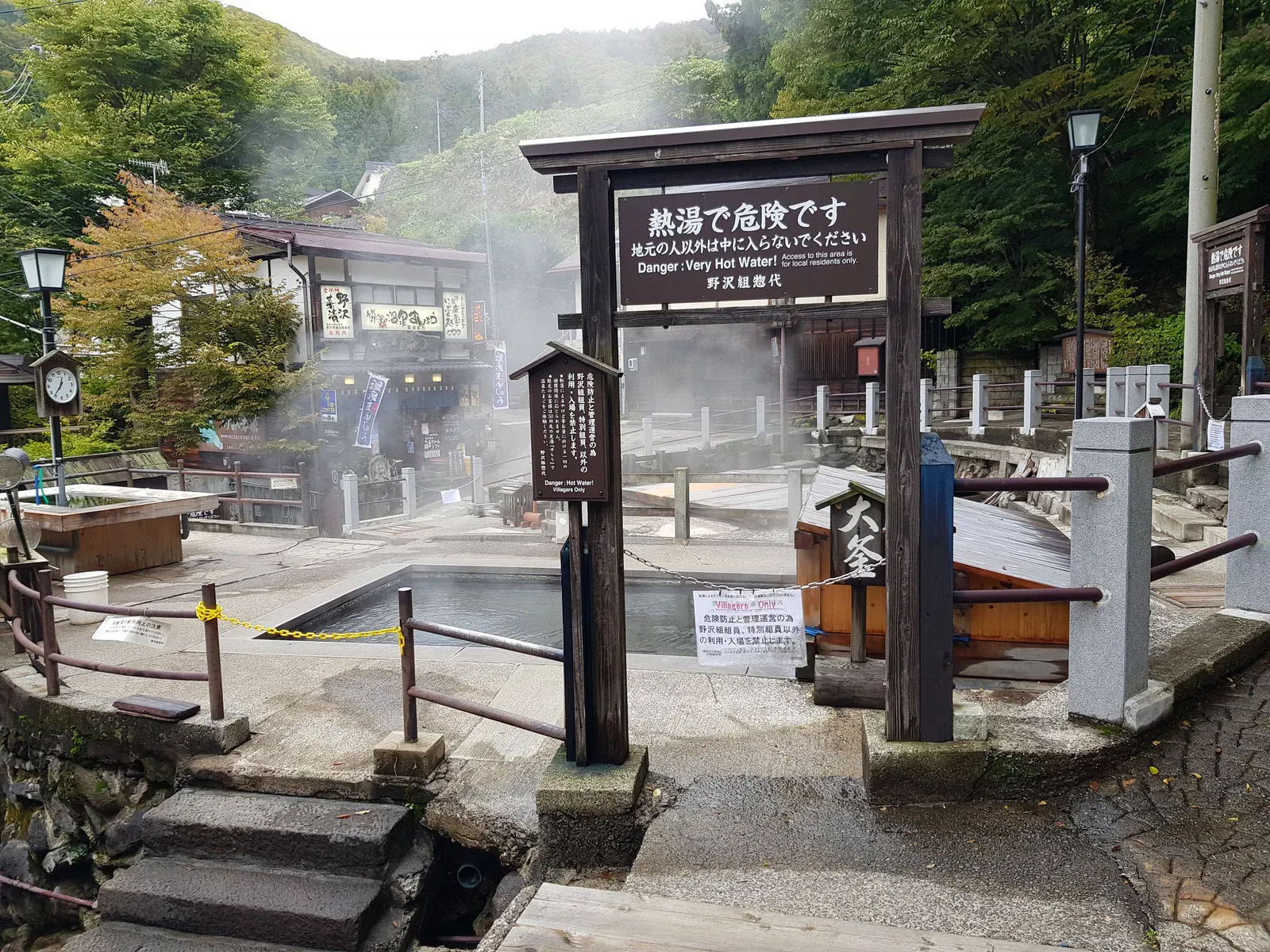
The village’s 13 public baths (sotoyu) are free to use. Each has a donation box, and the village bath association asks for a donation. Not all are open to visitors: Asakama no Yu is restricted to villagers, and Taki no Yu may be limited to guests staying in the village, according to one guide. Ogama, the cooking spring, bars non-villagers. Akiba no Yu was reported suspended in 2026, and its reopening is unknown.
- Hours: most baths run 6:00 to 23:00 from December to March (5:00 from April to November). A few close earlier, such as Shin-yu at 22:00. Late-night bathing is banned.
- Bring: a small towel, soap and shampoo. The baths supply none, according to one guide.
- Order: wash at the taps first and keep the towel out of the tub. Turn the tap off once the water suits you.
- Heat: one guide gives tub temperatures of 40 to 55 C. The springs feeding them run up to about 90 C.
Before you go Some baths here reach 55 C. Cool the water with the wooden oar provided before you step in.
Can you use the baths with a tattoo?
The village tourism association publishes no tattoo rule for the 13 baths, and that is not permission. Policy can differ by bath, so ask first. A private bath or a cover is the fallback; no private-bath prices were found for the village. See Can I go in an onsen with a tattoo? and Can I use a private onsen bath alone or as a couple?.
What is the Dosojin fire festival?
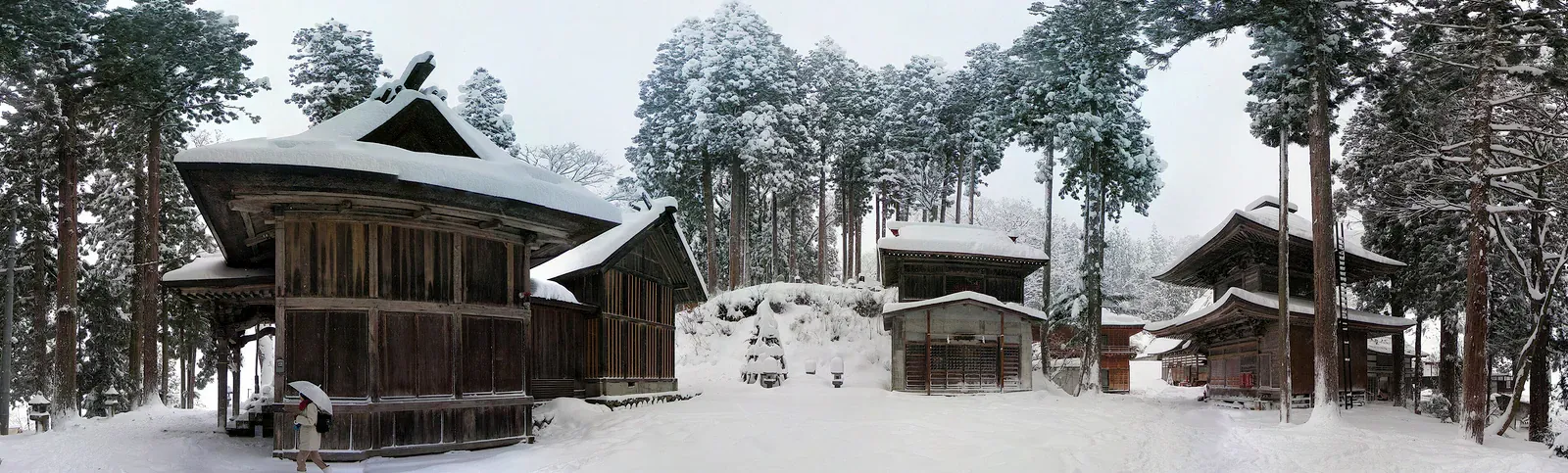
It is held on 15 January every year, a Friday in 2027, according to a local English page that is not the tourism association’s. The page says it is open to residents and guests staying in the village, so a day trip does not fit its wording. Last known (2026): tickets went only to villagers and guests staying overnight; the 2027 rules are unclear right now. It is an evening ceremony of about 2 to 3 hours (reported as 20:30 to 22:00 in 2026). Visitors are asked to be respectful, not push and not take souvenirs, and the fire throws embers. No fee is stated.
Rooms for it go fast, according to one guide. No spectator rules were found on an official page, so ask the Nozawa Onsen Tourism Association before you book.
Ride & Soak card: one day in Nozawa
- Transport: Shinkansen to Iiyama (about 100 minutes), then the Liner, $4 (¥600).
- Thrill: an adult day ticket, $50 (¥7,800). The named lifts finish between 15:30 and 16:30, and a night ticket, $18 (¥2,850), helps only on the listed night dates.
- Soak: any bath open to visitors until 23:00, free with a donation, plus your own towel and soap.
- Meal: not found: no restaurant, price or opening hour is confirmed.
Where next?
Sort the money with Passes & prices. For bath manners across Japan, read the Onsen hub.
Quick answers
Are Nozawa Onsen's baths really free?
Yes, the village's 13 public baths are free to use. The village bath association asks for a donation, and each bath has a donation box. Not every bath admits visitors: Asakama no Yu is for villagers only, Ogama (the cooking spring) bars non-villagers, and Taki no Yu may be limited to guests staying in the village.
Can I use the Nozawa village baths with a tattoo?
The village tourism association publishes no tattoo rule for the 13 baths, and that is not permission. Policy can differ by bath, so ask first. A private bath or a cover is the fallback.
Can tourists go to the Nozawa Dosojin fire festival?
Only if you stay in the village. It is held on 15 January every year, a Friday in 2027, and a local English page says it is open to residents and guests staying in the village, with no fee stated. Last known (2026): tickets went only to villagers and overnight guests. The 2027 rules are unclear right now.
Nozawa Onsen or Hakuba?
Choose Hakuba for steeper, longer runs across ten resorts on one valley pass at $72 (¥11,100) a day; choose Nozawa for one village resort at $50 (¥7,800) with 13 public baths. Nozawa is on neither Ikon nor Epic, and Epic gives holders one free 5-day ticket across the Hakuba Valley resorts.