
Guide · Culture
Hatsumode: New Year at Japan's temples and shrines, 2026-27
Temples and shrines stay open at New Year. Four sites draw over 1 million visitors each, with queues of an hour or more. Known hours and reserved trains.
Hatsumode is the first shrine or temple visit of the new year, and temples and shrines stay open for it while many shops and restaurants close between 29 December and 4 January. Four sites draw more than 1 million visitors each in the first days, with queues of an hour or more, per a secondary travel guide. Known New Year hours are in the table below; most 2026-27 hours are not yet announced.
Closures, trains and the Kyoto list are in Japan New Year closures 2026-27, and festival dates are in the matsuri calendar. This page is part of the Culture hub.
What is hatsumode?
Hatsumode means the first visit of the year to a shrine or temple, especially on 1 January. You pray at the hall as on any other visit; the steps are in Shrine and temple etiquette.
Temples ring bells at midnight, per the secondary guide. Some sites open through the night: Yasaka Shrine’s grounds are open 24 hours for worship over New Year, and Okunoin’s Torodo at Koyasan runs extended hours from midnight to 14:00 on 1 January, per the Koyasan visitor site (see Koyasan temple stay).
Which sites draw the biggest crowds?
Four sites each draw more than 1 million people in the first days of January, per the secondary guide:
- Meiji Jingu in Tokyo.
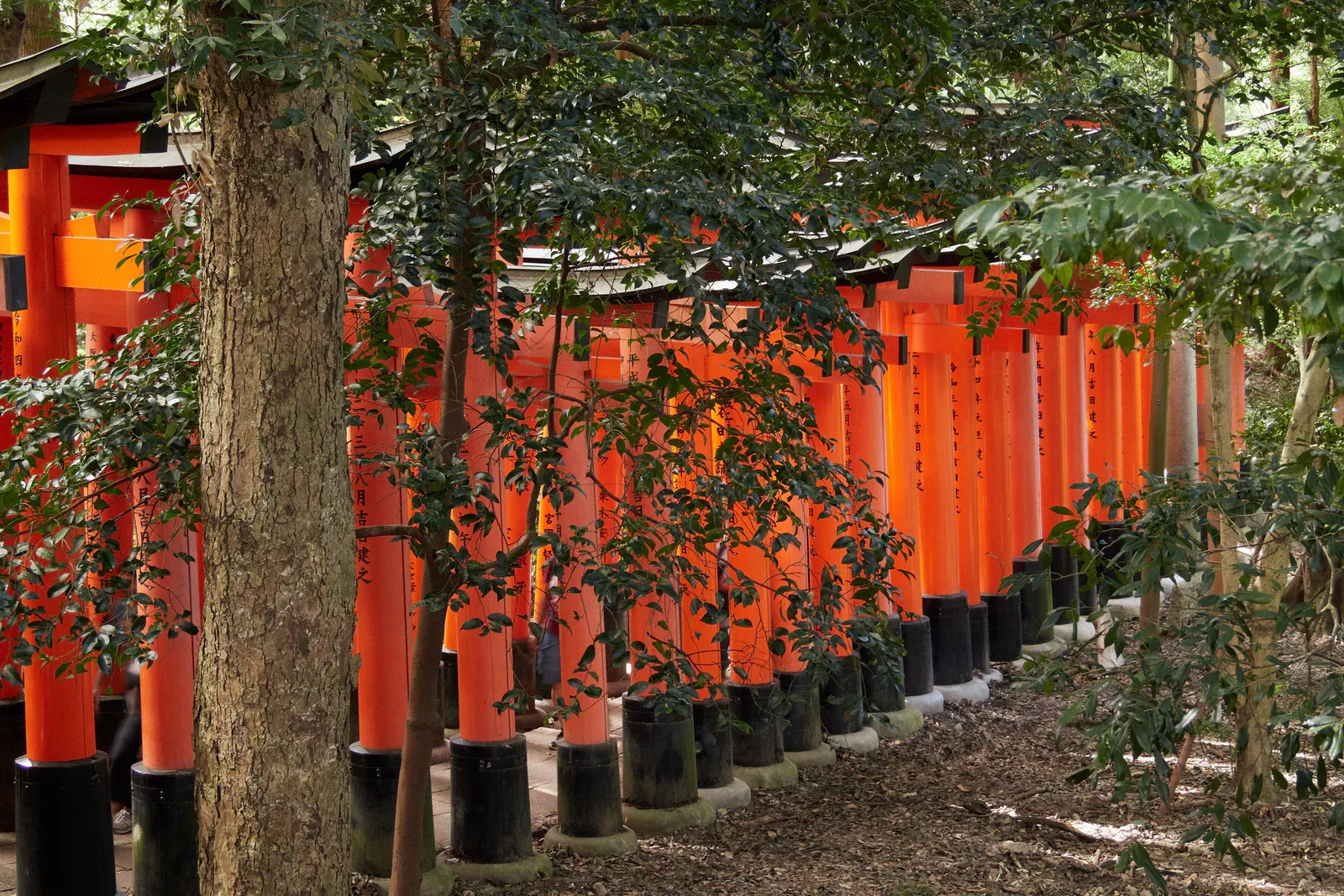
- Fushimi Inari Taisha in Kyoto.
- Sumiyoshi Taisha in Osaka, which lists about 2 million hatsumode visitors.
- Tsurugaoka Hachimangu in Kamakura.
The guide puts queues at an hour or more at the biggest shrines. It gives no crowd figure for other temples and shrines or for later days in the window.
Fushimi Inari’s visitor rules matter more in a crowd: no photos or filming on narrow paths if they block worshippers, no shouting or sitting on the ground, no eating outside rest areas, no drones and no litter.
How do you plan a hatsumode visit?
Plan around the crowd and the closures:
- Allow an hour or more in the queue at the four biggest sites.
- Go early. The guide says Fushimi Inari is quieter at early hours.
- Check the site’s own page for its 2026-27 hours before you commit to a time.
- Carry coins for offerings and stamps.
- Reserve long-distance trains for 25 December 2026 to 5 January 2027.
What do individual sites say about New Year?
Each site sets its own New Year hours; the table lists the facts available.
| Site | New Year facts |
|---|---|
| Meiji Jingu | Open every day. Hours follow sunrise and sunset: 06:40 to 16:00 in December, 06:40 to 16:20 in January |
| Sumiyoshi Taisha | Main hall 06:30 to 17:00 from October to March. Parking closed 31 Dec to 3 Jan. Holiday and festival hours may differ |
| Fushimi Inari | Grounds open 24 hours and office about 08:30 to 16:30, per a secondary note |
| Yasaka Shrine | Grounds open 24 hours for worship, office 09:00 to 17:00. Last known events: Okera-mairi from about 19:30 on 31 Dec, Okera festival on 1 Jan, hatsu-noh on 3 Jan |
| Kasuga Taisha | Gate 06:30 to 17:30, worship hall 07:00 to 17:00 from November to February. Honden special visit closed 20 Dec to 7 Jan |
| Zenkoji | Closes at 13:00 on 31 Dec |
| Okunoin | Torodo 06:00 to 17:00, extended on 1 Jan from midnight to 14:00 |
| Kiyomizu-dera | Its page says the 31 Dec bells are not open to public reservation |
| Kotohira-gu | Treasure House and Takahashi Yuichi Museum open weekends and holidays only, 30 Dec to 3 Jan |
| Atsuta Jingu | Treasure hall closed 25 to 31 Dec, last known |
| Ginkaku-ji | Pre-written goshuin (kakioki) schedules for the year-end and New Year period are posted on its site |
The Meiji Jingu and Sumiyoshi hours are regular winter hours, not New Year schedules.
What closes and what stays open?
Plan for a closure window from 29 December to 4 January. Many attractions, shops and restaurants close on some days in it, and 1 January is the hardest day. Museums, gardens and castles often close for several days in a row, while temples and shrines generally stay open. No national rule sets the dates, so each venue decides. A secondary guide says banks and ATMs close too, 1 January most of all.
Offerings and stamps are paid in coins. Kyoto’s tourism association says many purchases and temple admission fees there can only be paid in cash. For the stamp desk, see Goshuin.
Before you go Get cash and coins before the window opens on 29 December, because a secondary guide says banks and ATMs close, 1 January most of all.
Which trains need a reservation?
Two sets of services are all-reserved over New Year, so you need a reservation to ride:
- The Hida, Shinano and Nanki limited expresses, from 25 December 2026 to 5 January 2027.
- The Sanyo Shinkansen Nozomi, which has an all-reserved period that includes those dates.
Other services follow their own rules, so check the operator’s page for your train.
What is still unannounced?
Several 2026-27 details are still open:
- Meiji Jingu: New Year hours are not yet announced.
- Sumiyoshi Taisha: 2026-27 hatsumode hours.
- Fushimi Inari Taisha: 2027 hatsumode details.
- Yasaka Shrine: 2027 specifics. An older notice, two to three years back, closed the grounds from 23:00 to 00:00 on 31 December and may not repeat. The shrine office is on 075-561-6155 (+81 75 561 6155 from abroad).
- Ginkaku-ji: the dates of its New Year kakioki schedule.
- Kyoto closures: the 2026-27 list. The last known edition is the Kyoto City Tourism Association’s PDF created on 17 December 2025, which likely covers 2025-26. Its text could not be read, so no Kyoto site’s dates here come from it.
- JR: operations on 31 December and 1 January, including the Hokuriku Shinkansen.
To verify Check each shrine or temple page in December: the queue times and 1 million figures come from one secondary guide, and no official hatsumode schedule page is found.
Where next?
- Japan New Year closures 2026-27: what shuts, which trains are reserved.
- Shrine and temple etiquette and Goshuin.
- Kyoto temples and shrines: Fushimi Inari, Kiyomizu-dera and Ginkaku-ji.
- Nara, Osaka, Koyasan and Ise: Sumiyoshi Taisha, Kasuga Taisha and Koyasan.
- The temples and shrines guide: every site in one table.
- The Culture hub.
Quick answers
What is hatsumode?
The first visit to a shrine or temple in the new year, especially on 1 January. Temples also ring bells at midnight, per a secondary travel guide.
Are temples and shrines open on 1 January?
Generally yes. They stay open while many shops and restaurants close on some days between 29 December and 4 January, and 1 January is the hardest day. Each site sets its own hours.
How long are the queues at hatsumode?
An hour or more at the biggest shrines in the first days of January, per a secondary travel guide. It names Meiji Jingu, Fushimi Inari, Sumiyoshi Taisha and Tsurugaoka Hachimangu, each with more than 1 million visitors.
How do I avoid the crowds at hatsumode?
Go early. A secondary travel guide says Fushimi Inari is quieter at early hours. The guide names no other quiet times, and the four biggest sites each draw more than 1 million visitors in the first days.
Do I need to reserve trains for New Year?
On the listed services, yes. The Hida, Shinano and Nanki limited expresses are all-reserved from 25 December 2026 to 5 January 2027, and the Sanyo Shinkansen Nozomi has an all-reserved period that includes those dates.