Guide · Anime and manga
Anime and manga in Japan: where to go, what to book, what it costs
Book Ghibli and Sanrio Puroland ahead, walk into Akihabara, Ikebukuro and Nakano, and learn the arcade, maid cafe and tax-free rules before you spend.
Plan an anime and manga trip around three bookings and three districts. Book the Ghibli Museum, Ghibli Park and Sanrio Puroland ahead, walk into Akihabara, Ikebukuro and Nakano Broadway, and read the tax-free section before you buy, because the method changes on 1 November 2026. Everything else here, from arcades to pilgrimage spots, needs no ticket.
This page is the pillar of the Anime and manga hub. Each section gives official rules and prices and marks anything unconfirmed. Dollar figures use about ¥155 to US$1 and are rounded; you pay in yen, so check the rate.
What should you do, and where?
Nine places publish hours, booking rules or prices you can plan around. Districts, arcades, cafes and pilgrimage spots follow.
| Experience | Where | Hours or booking | Price |
|---|---|---|---|
| Ghibli Museum | Mitaka, Tokyo | 10:00 to 18:00. Advance reservation only. Sale at 10:00 JST on the 10th of the previous month | Adult $6 (¥1,000) |
| Ghibli Park | Aichi | Advance tickets only. Sale at 14:00 JST on the 10th, two months ahead | Adult $21 to $50 (¥3,300 to ¥7,800) |
| Nintendo TOKYO | Shibuya PARCO, 6F | 10:00 to 21:00. Numbered ticket on busy days | Free entry |
| Nintendo OSAKA | Lucua Osaka South, 13F, Umeda | 10:00 to 20:00. Numbered ticket on busy days | Free entry |
| Pokemon Center | Sunshine City Alpa, 2F, Ikebukuro | 10:00 to 20:00. Hours can change | Free entry |
| Sanrio Puroland | Tama Center, Tokyo | Hours set per day. Passport and visit reservation both required | Day from $25 (¥3,900), Afternoon from $18 (¥2,800) |
| Suginami museum | Suginami Kaikan, 3F, Kamiogi | 10:00 to 18:00, last entry 17:30. Closed Monday | Free |
| Toei museum | Oizumi, Nerima | Closed Wednesday. Current hours unclear | Free |
| Gundam Base | DiverCity Tokyo Plaza, 7F, Odaiba | 10:00 to 21:00. Entry limits when busy | Free to enter |
Six of the nine are free to enter. The Ghibli Museum’s closed day is not on its hours page, so check its ticket calendar before you pick a date.
Which tickets must you book ahead?
Three places sell by reservation only: the Ghibli Museum, Ghibli Park and Sanrio Puroland. Two Nintendo shops use numbered tickets instead.
Ghibli Museum
The Ghibli Museum in Mitaka puts next month’s tickets on sale at 10:00 JST on the 10th. December tickets go on sale on 10 November 2026 and January tickets on 10 December. Admission is for a set date and entry time, nothing is sold at the museum, and buying tickets for resale is not allowed. An adult ticket costs $6 (¥1,000).
Overseas buyers use the Lawson Ticket English site or a Sunrise Tours JTB bus tour, according to the official page. The museum is a 15 minute walk from the south exit of JR Mitaka station. The full schedule is in Ghibli Museum and Park tickets.
Ghibli Park
Ghibli Park in Aichi sells two months ahead, on the 10th at 14:00 JST, so January 2027 tickets go on sale on 10 November 2026. A weekday adult ticket costs $21 (¥3,300) for three areas and $47 (¥7,300) for all five. Weekend and holiday prices are higher. Bring your passport, because ID may be checked, and expect no refund, change, reissue, resale or transfer. A Park ticket does not work at the museum.
Sanrio Puroland
Sanrio Puroland in Tama needs two things: a passport (the ticket) and a visit reservation. Entry without a reservation is refused, with no refund. For adults aged 18 to 64, the Day Passport starts at $25 (¥3,900) and the Afternoon Passport, with entry from 14:00, starts at $18 (¥2,800). Prices vary by date.
Same-day reservation slots are possible when some are free, and more are released near opening. Hours are set per day on a schedule page, and closing days exist without a fixed weekday. Tama Center station, on the Keio, Odakyu and Tama Monorail lines, is about a 5 minute walk.
Nintendo shops
Nintendo TOKYO and Nintendo OSAKA are free to enter. On weekends, holidays and busy days each person takes one numbered ticket. In Tokyo, collect it at PARCO 1F before opening, or at the outdoor stairway by the Mario statue on 6F after opening. In Osaka, collect it at 1F South Gate Plaza before opening, or at the store entrance on 13F after opening. The Nintendo pages are in Japanese.
What is in Akihabara?
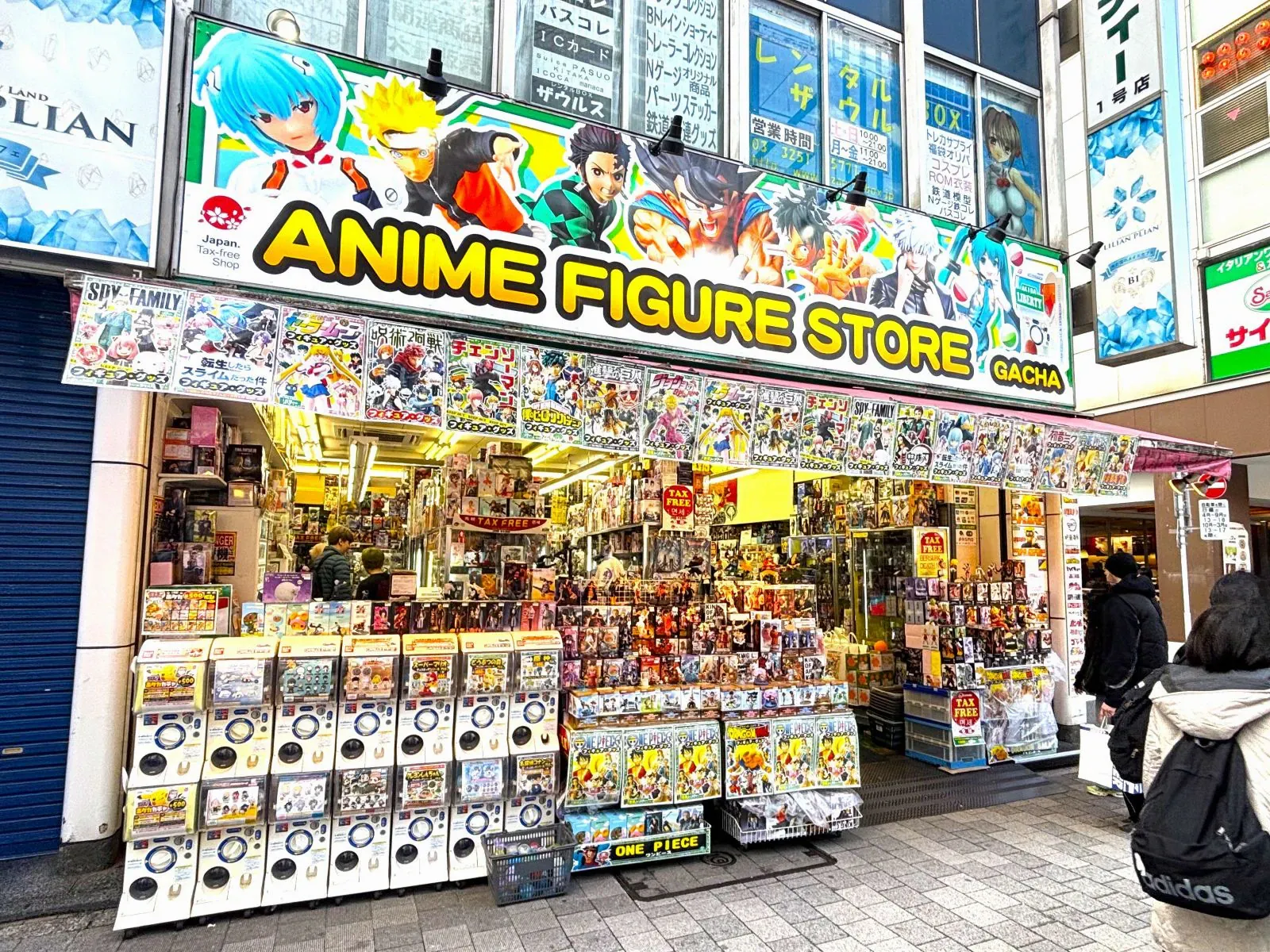
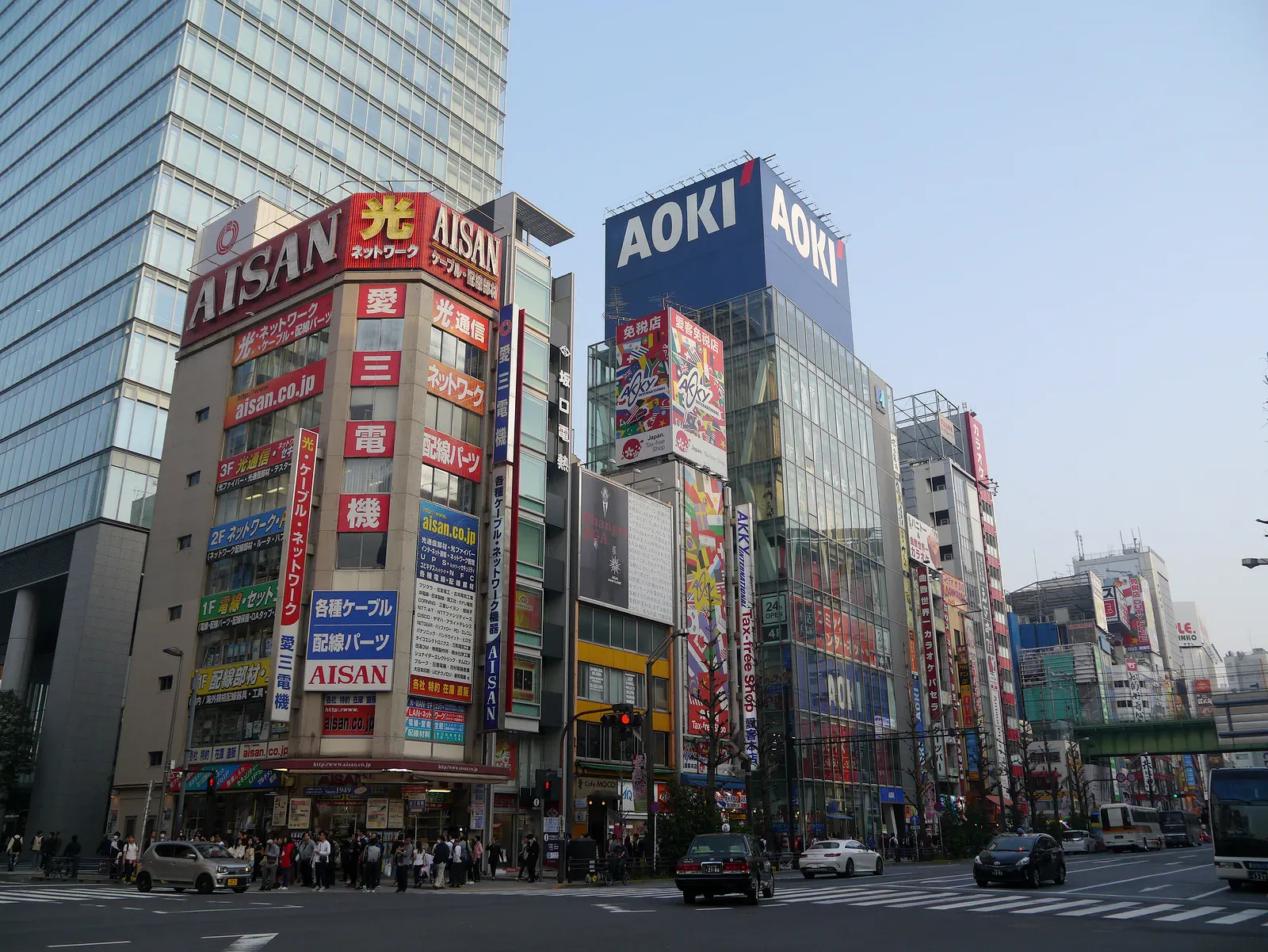
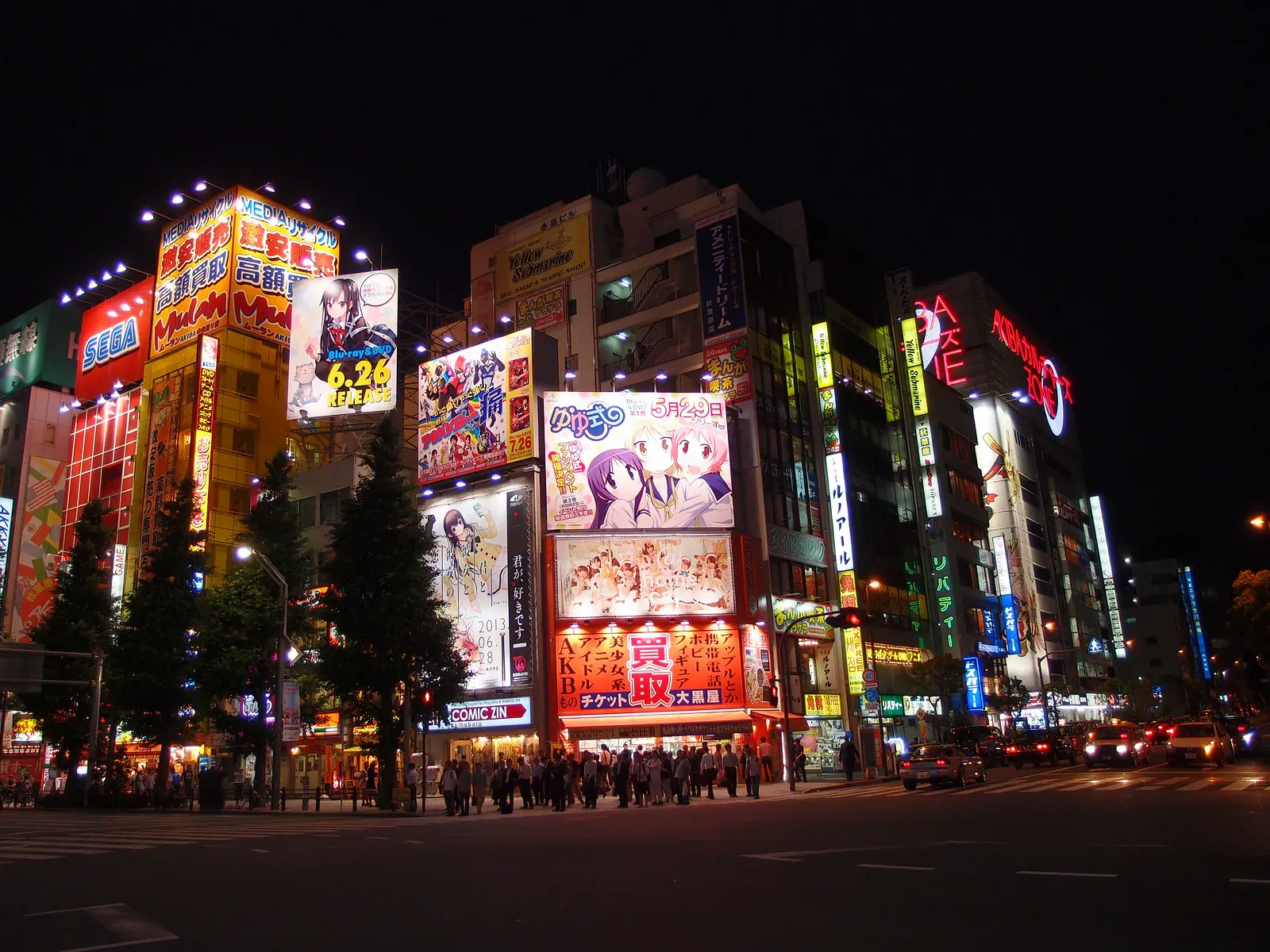
Akihabara packs gachapon halls, arcades, maid cafes, electronics stores and second-hand shops into one district. This section uses what the venues and local bodies say about themselves, with no ranking.
- Gachapon Kaikan is Akihabara’s capsule-toy hall, with about 500 machines according to a secondary listing. Its official page was unreachable on the latest check, so confirm the hours before you go.
- Mandarake Complex sells second-hand anime and manga goods. Its official pages returned errors, so its hours are unconfirmed.
Two local rules affect visitors. On pedestrian-paradise days, when the main street is closed to cars, the Akihabara Electric Town Promotion Association bans selling goods, performing, street live shows and cycling. Visitors are bound by the same ban, so plan to browse, not to perform or sell. A secondary guide puts the closure on Sundays from 13:00 to 18:00, or to 17:00 from October to March, so check the association’s calendar.
The other is the Akihabara Agreement of 2010, a local voluntary rule that includes a ban on illegal street selling, per Chiyoda Ward’s page. The ward also has an anti-touting ordinance, with patrols reported from 2019. The ward’s touting page focuses on adult-service touting, not maid or cosplay cafes. News reports (secondary) describe cafes that overcharged visitors who followed street invitations. Ask for the price list before you sit, and decline invitations from the street.
For a timed route and a skip list, read Akihabara for first-timers. For the three districts side by side, see Anime districts in Tokyo.
What is in Ikebukuro?
Ikebukuro is built around Animate’s main store and Sunshine City, a mall complex with several character stores. The facts below come from the operators’ own pages unless marked secondary.
Animate Ikebukuro Main Store lists 10:00 to 21:00 on its official page, which does not split weekdays from weekends. It stands at 1-20-7 Higashi-Ikebukuro, five minutes from the east exit. The page points to Animate’s tax-free guidance, mentions Alipay and WeChat Pay, and asks visitors to use public transport, citing pedestrian priority in Toshima.
Sunshine City’s English site lists an aquarium, an observatory, a planetarium, NAMJATOWN, the Bandai Namco Cross Store Tokyo, a Crayon Shinchan official store and Sanrio Cafe. Its home page gives no opening hours or tax-free handling.
Pokemon Center Mega Tokyo is on the second floor of Sunshine City’s Alpa building. Its official store page lists 10:00 to 20:00 daily, warns that hours can change and that temporary closures happen, and states no entry method. The nearest stations are Higashi-Ikebukuro on the Yurakucho Line (about 3 minutes on foot) and Ikebukuro (about 8 minutes).
Otome Road, the street of shops between Animate and K-Books Cosplay Store, has no single operator, so hours vary by shop, according to secondary listings. See Anime venues in Tokyo for the brand stores and museums.
What is in Nakano Broadway?
Nakano Broadway is a building, not a street, with about 207 stores from the basement to the fourth floor plus the Petit Paris section. It opened in 1966 as a commercial and residential complex, and its own site says it became a “subculture sacred ground” after 1991.
Mandarake opened in Nakano Broadway in 1980 as a manga bookstore, per the building’s site. Its Nakano listing gives 12:00 to 20:00 daily all year, with buyback reception until 19:30. The building’s official pages give no opening hours or closed day. Secondary listings put shop hours at about 11:00 to 20:00, varying by shop, and say many shops close on Wednesdays. Check the shop you want.
The building is a 5 minute walk from the north exit of Nakano station, on the JR and Tozai lines, and has no parking. Floor-by-floor details are in Nakano Broadway and Mandarake.
Which museums and brand stores are free?
Six places in the table cost nothing to enter.
Suginami Animation Museum is on the third floor of Suginami Kaikan. It is open 10:00 to 18:00, with last entry at 17:30. It closes on Mondays (the next day if Monday is a holiday), over year-end and New Year, and occasionally for temporary reasons. GO TOKYO lists it among five English-friendly anime and manga museums.
Toei Animation Museum in Oizumi closes every Wednesday plus irregular days, so use its opening calendar. A 2019 Toei release says admission is free, and the guide page states no fee. Current hours are unclear right now; the last known hours (2019 release) were 10:00 to 17:00 with last entry at 16:30. Photos and video are allowed only in designated areas, with no tripod, monopod or selfie stick and no live streaming.
The Gundam Base Tokyo is on the seventh floor of DiverCity Tokyo Plaza in Odaiba, with an Annex on the second floor. It lists 10:00 to 21:00 following the plaza, and entry limits or numbered tickets may apply when it is busy. The site mentions a changed advance lottery without giving details. The Gundam Factory Yokohama closed on 31 March 2024, per news reports (secondary), so the Tokyo base is the one to plan around.
Tokyo Anime Center is in DNP Plaza Shibuya, inside Shibuya MODI, not at its old Akihabara UDX site. Its About page gives 11:00 to 19:00 and says hours vary by project, while Tokyo’s tourism page gives 11:00 to 20:00. Tickets are timed per exhibit.
The Kyoto International Manga Museum charges admission: an adult ticket costs $8 (¥1,200). It is open 10:00 to 17:00, with last entry at 16:30, and closes every Wednesday. It holds about 50,000 books on its Manga Wall. The other museums are compared in Manga museums in Japan.
How do arcades work?
Arcade rules come down to manners, tokens and age limits, and Taito Station publishes them. Its English site lists these:
- Do not block walkways or disturb other players. Playing several machines at once is considered impolite. Keep your belongings with you.
- Alcohol is not allowed.
- Photos to share are welcome, but photos that include other people are not allowed.
- Pay with coins from a change machine, with e-money (some stores excluded), or by exchanging a card for tokens at the counter (some stores excluded).
- Tokens stay in the store where you bought them. They cannot be transferred, traded, redeemed or refunded.
- Entry for under-age players is restricted during set hours under Japanese rules, staff may ask for ID or a passport, and guardians must stay with children. Details vary by prefecture.
Taito’s page gives no cost per play, and the Sega GiGO home page states no price, photo or age rules. Visitor guides (secondary) add three claw machine habits: do not shake the machine, expect some venues to rotate players, and ask staff for help with placement. The full set is in Arcades and gachapon.
How do gachapon work?
Gachapon are capsule-toy machines: you turn the handle and get a random capsule. Bandai’s Gashapon brand has run since 1977 and reaches its 50th anniversary in 2027, per its official site. Prices follow the capsule type on Bandai’s own schedule.
| Capsule | Price |
|---|---|
| Common | $2 to $3 (¥300 to ¥500) |
| Premium | $5 (¥800) |
| Flat capsules | $1 to $3 (¥200 to ¥500) |
| Boxed items | $4 (¥550) |
Across Bandai’s schedule, capsules cost $1 to $5 (¥200 to ¥800), and most sit at $2 to $3 (¥300 to ¥500). Visitor guides (secondary) say most machines take only $1 (¥100) coins, some take $1 to $3 (¥200 to ¥500) coins, and none give change, so a $32 (¥5,000) note will not work. Some machines take IC cards, so look for the icon. If a capsule jams, ask staff instead of forcing the machine.
Bandai’s site has a store finder, labelled in Japanese.
How do maid cafes work?
A maid cafe charges an hourly entry fee plus what you order. Maidreamin’s charge page is the official price list.
| Guest | Entry fee |
|---|---|
| Adult | $6 (¥880) |
| Age 60+ | $3 (¥440) |
| University/vocational | $4 (¥660) |
| Junior/senior high | $4 (¥550) |
| Elementary | $2 (¥330) |
| Under elementary | Free |
The adult fee includes tax. The entry fee and food or drink are billed per hour, extensions use the same rate, and there is no extension charge if service is late. Students show ID. The page puts average spending at $11 to $32 (¥1,650 to ¥5,000) per person. Entry after 22:00 costs $17 (¥2,600), which includes one drink. Maidreamin takes cash, major cards and several mobile wallets.
Maidreamin’s FAQ sets the rules:
- Photos and video are allowed only if no maids, kitchen cast or other guests appear.
- Do not touch the maids or hand them gifts directly.
- Maids do not sit beside guests or pour drinks.
- Seat changes are discouraged.
- Every shop is fully non-smoking, including e-cigarettes.
- Guests may leave when they like.
Book through the per-shop booking pages; groups use a contact form. The English site lists seven shops in Akihabara, plus shops in Ikebukuro, Shinjuku, Shibuya, Nagoya, Osaka, Sapporo and Fukuoka. It gives the rule as an entrance fee plus one drink or food item, with no prices or photo rules.
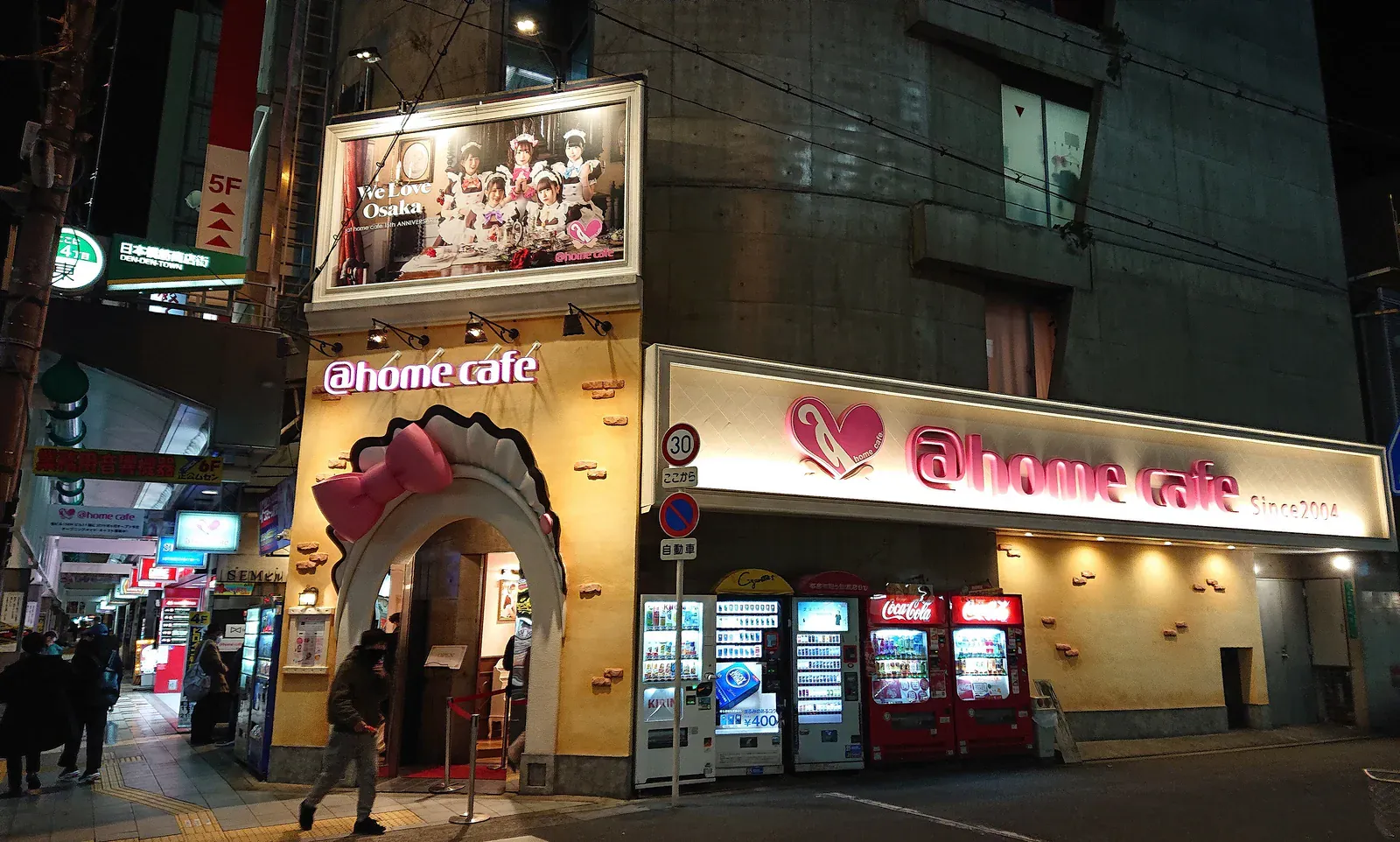
@home cafe’s charges and photo rules could not be read from its own pages, and Maidreamin’s pages list no price for paid photos with a maid, so none are given. More in Maid cafe guide.
Where are the real anime locations?
Anime pilgrimage means visiting places that appear in a series. Official tourism boards cover a few of them, and the table shows what each one publishes.
| Source | What it lists |
|---|---|
| Hida City | Spots for the anime Hyouka around Takayama, with a map |
| JNTO | Five anime locations, none in Tokyo, Kyoto, Osaka or Nagoya |
| GO TOKYO | An Anime and Manga hub, ten Tokyo spots on the 88 list and five museums |
| OSAKA-INFO | A guide to Nipponbashi Otaro Road, in Japanese |
| Kyoto, Nagoya | No anime theme page found |
Hida City’s page covers Hyouka, a TV anime broadcast from April to September 2012 that is set in Kamiyama, a fictional city based on Takayama. Its listed spots include Kajibashi, the Miyagawa Morning Market, Hie Shrine, Hirayu Onsen, Takayama City Library and the Garyu cherry trees, which are over 1,100 years old. A free Japanese “Butai Homon” map is available at the Takayama station tourist office and other city offices, and as PDFs online. The page asks visitors not to enter school grounds, and it prohibits photographing students. The page also says Takayama was selected as one of 88 Anime Tourism Association sites in 2018.
JNTO’s anime locations feature names five places: Ookawaso at Ashinomaki Onsen in Fukushima (Demon Slayer), Lake Suwa in Nagano (Your Name), Dogo Onsen Honkan in Ehime (Spirited Away), Oyama Dam in Oita (Attack on Titan) and Shiratani Unsuikyo on Yakushima (Mononoke). It lists none in Tokyo, Kyoto, Osaka or Nagoya.
GO TOKYO’s 88 Animation Spots page lists ten Tokyo spots, including Akihabara, Koenji, Nozoki-zaka, Chofu and Shibuya, with stamp locations. It is a 2022 version and partly dated.
The best-documented case of crowding is the Slam Dunk crossing at Kamakurakokomae station on the Enoden line. News reports (secondary), the latest from September 2025, describe crowds standing in the road, a city camera with signs in four languages, a guard from 10:00 to 18:00, a police box and a photo spot in a park to the west. A nearby toilet was reported closed at the end of April 2025. The reports mention guards and warnings but no fine. No 2026 city notice was found, so the current status is unclear. If a guard or officer asks you to move, move.
Beyond Hida’s rules, official etiquette pages are rare. Guides (secondary) repeat three habits: stay on public ground, keep quiet near homes and ask before photographing a person. See Anime pilgrimage etiquette and Anime locations by city.
Osaka’s Nipponbashi
Nipponbashi, known as Den Den Town, is Osaka’s electronics district turned anime, manga and game area, per secondary listings. OSAKA-INFO publishes a guide to Nipponbashi Otaro Road, described in its Japanese pages as West Japan’s largest anime and pop-culture hub.
Secondary listings place the district between Ebisucho and Nipponbashi stations, name Mandarake, Super Potato and Tora no Ana among its shops, and say hours vary by shop. The district association’s site and OSAKA-INFO’s English Den Den Town pages did not load, so no shop hours or tax-free rules are given.
Cosplay
Venues and events set cosplay rules in Japan. No street rule naming cosplay was found from Chiyoda Ward or the Akihabara association: the ward’s living environment ordinance targets litter, smoking and touting, and the pedestrian-paradise ban on performing applies on closed-road days.
Events publish clear rules. The Ikebukuro Halloween Cosplay Festival’s 2026 rules say to change only in the venue’s rooms, not to enter or leave in costume, to ask consent before photos, and to bring no alcohol and no live streaming. Face-covering masks are allowed only in photo areas, and some stores refuse cosplayers.
Comiket’s cosplay page for Comiket 107 asks you to change in the cosplay changing rooms, never in a toilet, and not to arrive or leave in costume. The first changing-room entry each day costs $3 (¥500). Real or replica weapons are banned. See Comiket for tourists for the details.
What runs this winter?
Three events have confirmed dates between December 2026 and March 2027.
- Jump Festa 2027 runs on 19 and 20 December 2026 at Makuhari Messe, 9:00 to 17:00. Entry is free but by application or invitation, and everyone of elementary school age or older needs an e-ticket in the Jump NAVI app, which is in Japanese. The official page has no overseas visitor guidance.
- Comiket 109 runs on 29 to 31 December 2026 at Tokyo Big Sight. Its ticket system is not announced yet. Comiket 110 follows on 14 and 15 August 2027.
- AnimeJapan 2027 runs on 27 and 28 March 2027 at INTEX Osaka, its first time outside Tokyo. Some secondary sources give 26 to 28 March. Ticket details are not confirmed.
How does tax-free work after 1 November 2026?
Tax-free shopping becomes pay-then-refund on 1 November 2026. Until 31 October the tax comes off at the till. From 1 November you pay the price with 10% tax and claim the tax back at the airport. This summary rests on the official tax-free leaflet and on secondary guides that agree with it, so confirm the details at the shop and at the airport.
- Figures, manga and other goods are general goods under the same rules.
- Show the goods to customs at the airport before check-in and security, or use Visit Japan Web at the seven airports that support it.
- Leave within 90 days of the purchase date, and carry all the items out.
- Customs checks per receipt, and anything consumed in Japan gets no refund.
- Secondary guides put the minimum at $32 (¥5,000) before tax per shop per day. The official leaflet gives no figure.
- Used goods are generally eligible under national rules, but each shop needs a tax-free licence. Ask at the counter before you pay.
Where next?
Pick the guide for the part of your trip you are planning:
- Ghibli Museum and Park tickets for sale dates and prices.
- Akihabara for first-timers and Nakano Broadway and Mandarake for shopping routes.
- Anime districts in Tokyo and Anime venues in Tokyo for districts and brand stores.
- Arcades and gachapon, Maid cafe guide and Manga shopping for the rules and prices.
- Comiket for tourists and Manga museums in Japan for events and museums.
- Anime locations by city and Anime pilgrimage etiquette for the real locations.
The full list of guides is on the Anime and manga hub.
Questions
Book the Ghibli Museum, Ghibli Park and Sanrio Puroland. The museum sells next month's tickets at 10:00 JST on the 10th, the park sells two months ahead at 14:00 JST on the 10th, and Puroland needs a passport and a visit reservation. Districts, arcades and most brand stores need no ticket.
Go where the shop is. Akihabara has gachapon, arcades and maid cafes, Ikebukuro has Animate's main store and Sunshine City, and Nakano Broadway has about 207 stores with Mandarake open 12:00 to 20:00 daily. The shops' own pages give no ranking.
Yes, as a refund. You pay the price with 10% tax and show the goods to customs at the airport within 90 days. A minimum of $32 (¥5,000) per shop per day appears in secondary guides, not in the official leaflet, so confirm it at the counter.
Maidreamin's official adult entry fee is $6 (¥880) per hour, billed with a food or drink order. Its page puts average spending at $11 to $32 (¥1,650 to ¥5,000) per person. Entry after 22:00 costs $17 (¥2,600) with one drink.
Events publish the costume rules. Comiket and Ikebukuro's 2026 festival both require you to change inside the venue and not to arrive or leave in costume. No official street cosplay rule for Akihabara was found from Chiyoda Ward or the local association.