Guide · Onsen
Tattoos and onsen: yes, no, or ask first
Depends on the bath, not the law. Follow a stated rule, ask first when the page is silent, and keep a private bath as the fallback.
Depends on the bath, not the law. Japan has no national rule on tattoos in onsen, so each bath decides for itself, and many say nothing: one bath directory (secondary) has no recorded answer for 77% of its 6,173 listings. If the bath’s official page states a rule, follow it. If the page is silent, ask first, and keep a private bath or a cover as the fallback.
Which situation are you in?
Follow a stated rule; if the page is silent, ask first.
| Your situation | What to do |
|---|---|
| Rule stated | Follow it. Kusatsu, Kinosaki, Hakone Tenzan and Hakone Yuryo state theirs, below. |
| Page silent | Treat the answer as unknown. Ask first; a private bath or a cover is the fallback. |
| Ryokan booking | No per-ryokan policy is published. Ask when you book, before you pay. |
| Large tattoo | Covers work mainly for small tattoos, so plan on a private bath or a room with its own bath. |
Why do baths ban tattoos at all?
The ban stems from tattoos being linked with organised crime. A bath directory (secondary) puts it as a rule about that association, not about foreigners. The Japan Tourism Agency later encouraged inns to relax the rule and offer stickers or private baths, but adoption is optional. That is why policies differ bath by bath, and why some ryokan decide case by case.
What do named baths say?
Four places state a rule on their official pages and four say nothing. Each row reports only what the page says.
| Bath | What its official page says |
|---|---|
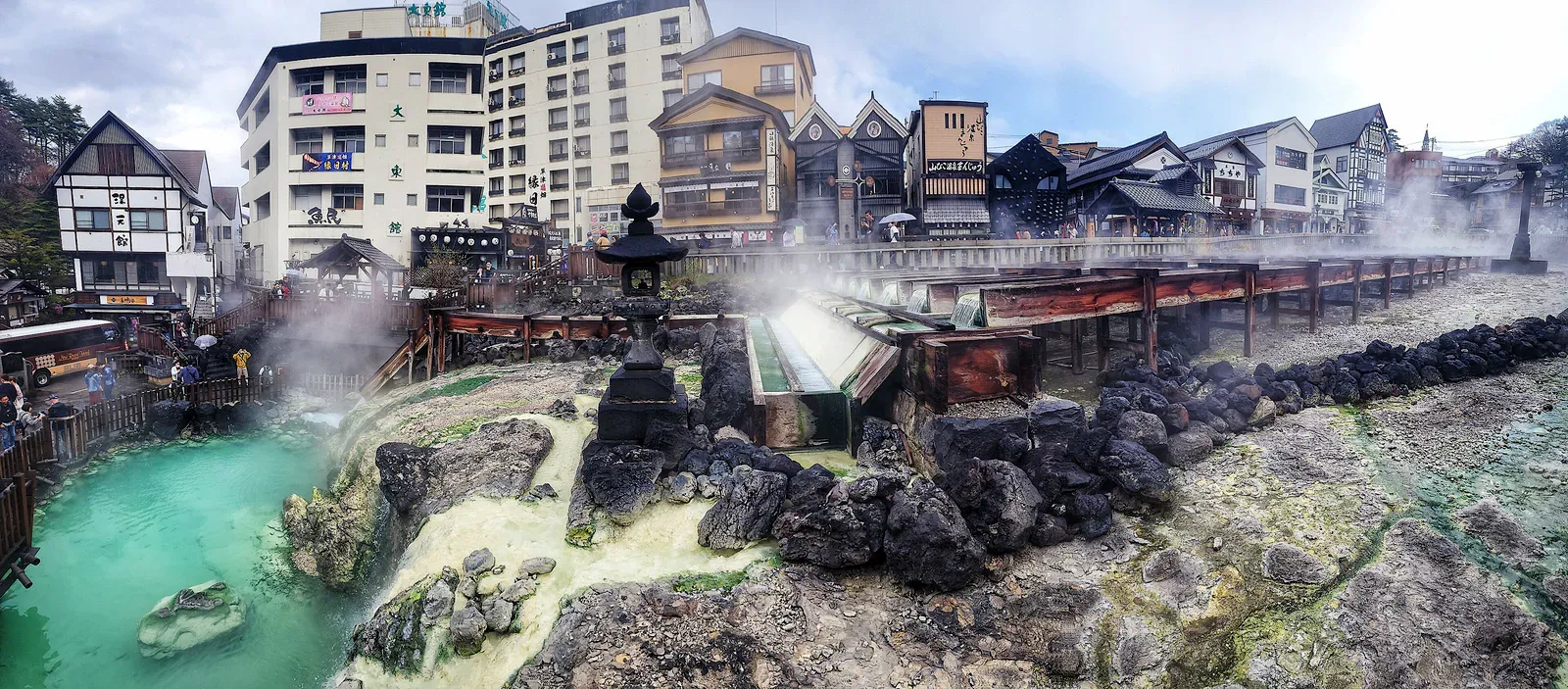
| Kusatsu baths | The Gozanoyu FAQ says there is no specific refusal of people with tattoos in the three baths (Gozanoyu, Ohtakinoyu, Sai-no-kawara Rotenburo), foreign visitors included, and asks you to follow the manners. |
| Kinosaki Onsen | The tourism site's home page says "All Tattoo Friendly", covering all sizes and designs. No rule per bath is published behind it. |
| Hakone Tenzan | Its FAQ accepts tattooed guests only when alone ("as a rule one person"). Two or more tattooed guests are not admitted, even of different genders. You are asked to cover, and the small Oku no Yu bath cannot be used by tattooed guests. |
| Hakone Yuryo | The Hakone tourism page says "No tattoos allowed" for the main and the private baths. |
| Nozawa baths | No tattoo restriction published on its official page. |
| Zao Dairotenburo | No tattoo restriction published on the operator page. Closed from late November to April. |
| Ginzan public baths | No tattoo restriction published on its official page. |
| Beppu Hyotan | No tattoo restriction published on its official page. |
Kusatsu’s wording stops at not refusing tattooed guests. Read it as not banned, nothing more, and follow the manners the FAQ asks for.
A blank row is not a yes. Policies can change, staff decide on the day, and each bath’s own page is the only source on tattoos.
What do the numbers say?
Two sources exist, and both have holes.
The first is a Japan Tourism Agency survey from June 2015, reported by a news outlet (secondary). About 3,700 facilities were sent the questionnaire and 581 replied, roughly 16%. Of those, 56% barred tattoos, 31% did not, and 13% allowed them if covered. The facilities chose whether to answer, and no newer survey is published.
The second is a bath directory (secondary), which has more baths but no stated date or method:
| Recorded status | Baths | Share of 6,173 |
|---|---|---|
| Allowed | 507 | 8.2% |
| Conditional | 244 | 4.0% |
| Not allowed | 673 | 10.9% |
| Unknown | 4,749 | 76.9% |
Read this as the directory’s coverage, not as the share of Japan’s onsen that accept tattoos. Among baths recorded as allowed or conditional, Oita has the most (140), then Hyogo (45), Nagano (41), Hokkaido (40) and Shizuoka (38).
What if the answer is no, or you cannot get one?
Work down this list.
- A bath whose official page states a rule you can live with. Kusatsu’s three big baths and Kinosaki are the examples above, and Snow onsen towns compares the winter villages.
- A private bath. The Japan Tourism Agency states that guests with tattoos can use private baths without issue, and a bath directory (secondary) calls them an option regardless of policy. Not every venue agrees: Hakone Yuryo bars tattoos in its private baths too, so ask. See Private onsen (kashikiri) and Can I use a private onsen bath alone or as a couple?. A ryokan room with its own bath is private by design; see Ryokan.
- A cover patch, where the bath allows it. The directory advises a patch that extends at least 1 cm past the tattoo’s edges, applied at least 30 minutes beforehand, with spares in your bag. It names Don Quijote and Matsumoto Kiyoshi stores as sources. Details are in Can I cover a tattoo with a sticker at an onsen?.
The directory calls ordinary sento (public bathhouses) the most welcoming type but gives no count. Super sento and spa complexes mostly prohibit tattoos, with some allowing them if covered. Ask there too.
How do you ask?
Ask before you travel, in writing if the bath has an email address, and request all three outcomes at once (the shared bath, a cover patch or a private bath) so one reply settles it. Something like: “Hello. I have a tattoo, about [size] on my [body part]. Can I use the shared bath, wear a cover patch, or book a private bath?”
At a desk or on the phone, the directory gives the Japanese phrase タトゥーは大丈夫ですか? (tatū wa daijōbu desu ka, “is a tattoo okay?”).
For the silent baths, the contact points are the Zao Onsen Tourist Association (023-694-9328), the Ginzan Onsen Visitor Information Office (0237-28-3933) and the Nozawa Onsen Tourism Association (contact form on its website). For Beppu Hyotan, ask the facility itself. For a ryokan, ask at booking.
Next: Onsen etiquette for manners once you are in, Can I go in an onsen with a tattoo? for the short answer, and the Onsen hub for the rest.
Questions
No national law. Each facility decides for itself. The ban traces back to tattoos being linked with organised crime, and the Japan Tourism Agency later encouraged inns to relax it and offer stickers or private baths.
Only where the bath allows them, and mainly for small tattoos. Japan Tourism Agency guidance suggests letting covered guests in, but each facility decides, and in the 2015 survey only 13% of respondents allowed covered tattoos.
Not by nationality. A bath directory (secondary) says the rule rests on the link with organised crime, not on discrimination against foreigners. Kusatsu's Gozanoyu FAQ names foreign visitors and says there is no specific refusal of people with tattoos.
It is a 2015 figure from a survey of 581 facilities, and no newer survey is published. Treat it as a rough guide from a self-selected sample, not a current rate.