Guide · Food
Okonomiyaki: Osaka vs Hiroshima, the two styles compared
Osaka mixes the batter and griddles it; Hiroshima layers the ingredients and includes noodles. How the styles differ and what to check before you order.
Osaka okonomiyaki mixes cabbage, flour and egg before it is griddled, and Hiroshima okonomiyaki layers its ingredients and includes noodles. Both are savoury cabbage pancakes, and the difference is in how they are built, per the Japan National Tourism Organization (JNTO). Osaka sits in Kansai and Hiroshima in Chugoku, so each style belongs to one region. Choose by structure: Osaka for one mixed pancake, Hiroshima for layers with noodles.
What is okonomiyaki?
Okonomiyaki is a savoury cabbage pancake. JNTO’s okonomiyaki guide describes two styles and sorts them by place: Kansai, with Osaka as the example, and Hiroshima. The Japan food guide lists the same two styles in its dish and region table, with Osaka style under Kansai and Hiroshima style under Chugoku.
How is Osaka-style okonomiyaki made?
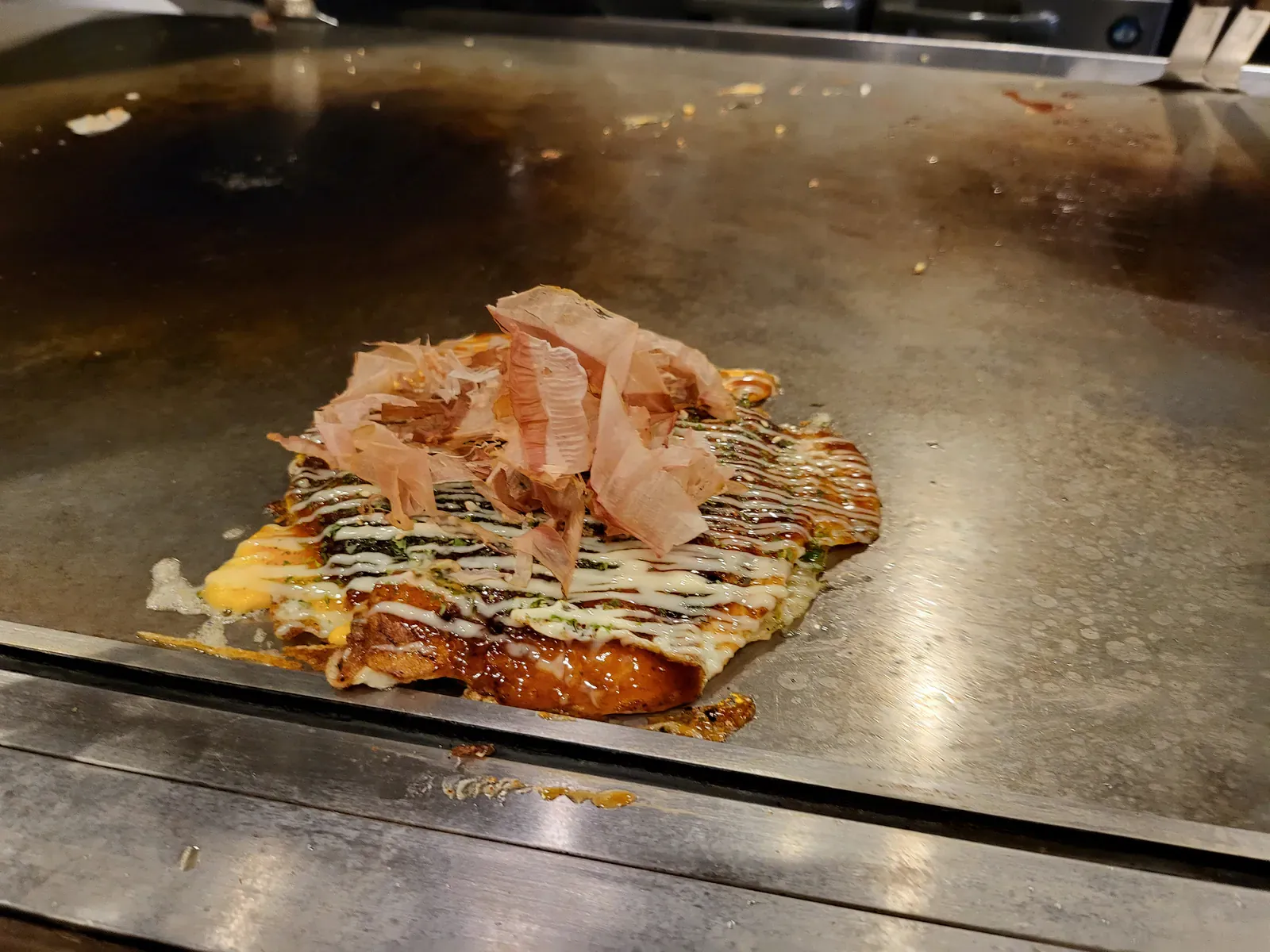
Osaka style, also called Kansai style, mixes cabbage, flour and egg into one mix and griddles it. The toppings go on the griddled mix.
JNTO lists the toppings as pork, sauce, mayonnaise and aonori. Aonori is a green seaweed seasoning. The list tells you three things before you order:
- Pork is a standard topping, so the dish is not vegetarian unless you ask for a change, and pork matters for halal and pork-free diets.
- Egg is in the mix, which matters for an egg allergy.
- Flour is the binder, and JNTO does not say what it is made of, so ask if you avoid wheat.
How is Hiroshima-style okonomiyaki made?
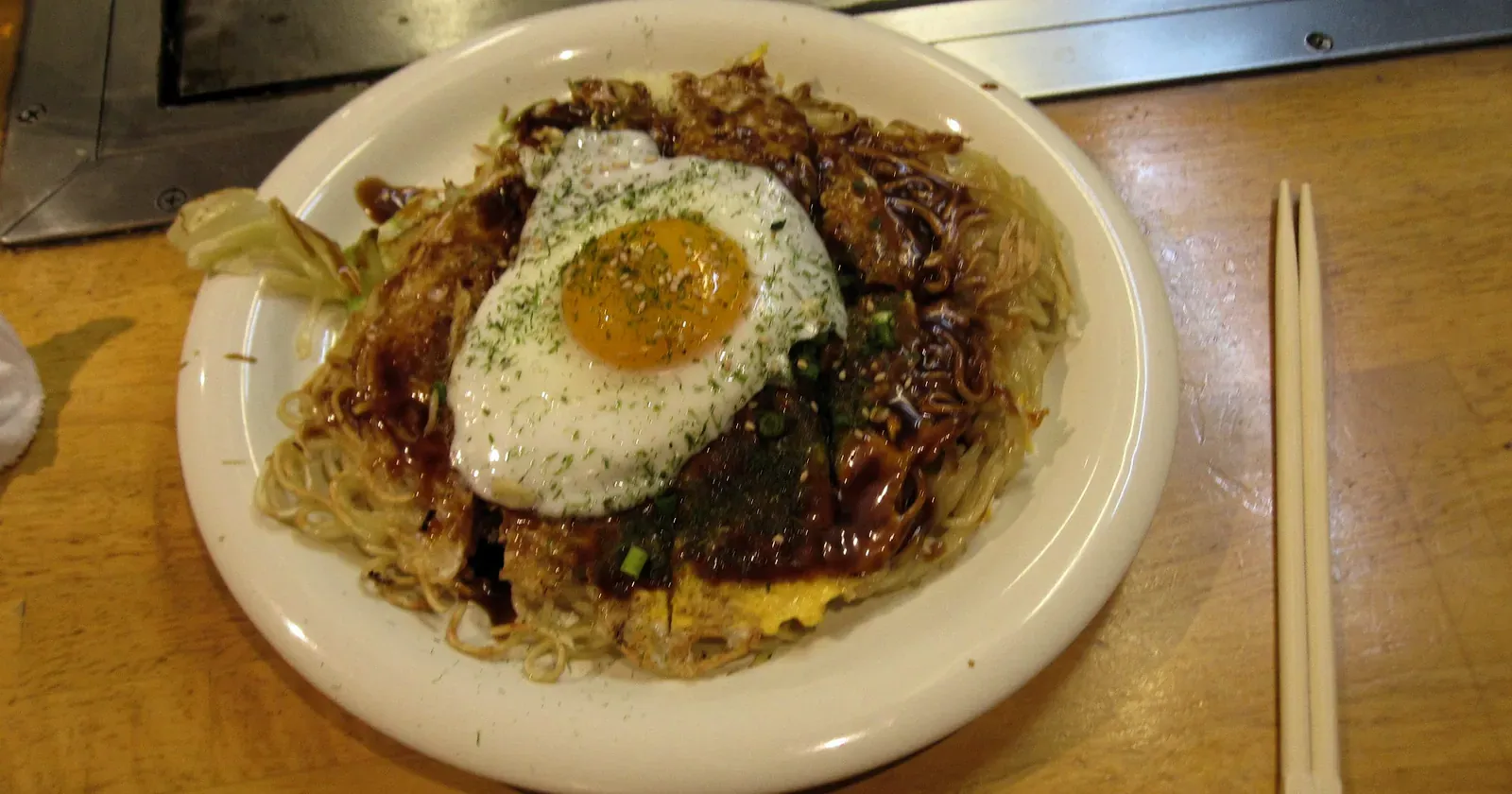
Hiroshima style layers its ingredients instead of mixing them, and it includes noodles. Those two points set it apart from the Kansai style, per JNTO, and the noodles are part of the style, not an extra.
JNTO does not name the Hiroshima toppings, the noodle type or the cooking method, so this page does not either. If you avoid wheat, egg or meat, ask the shop what each layer contains.
How do the two styles compare?
The two styles differ in method, noodles and region.
| Feature | Osaka style | Hiroshima style |
|---|---|---|
| Region | Kansai | Chugoku |
| Method | Cabbage, flour and egg mixed, then griddled | Ingredients layered, not mixed |
| Noodles | Not stated | Included |
| Toppings | Pork, sauce, mayonnaise, aonori | Not stated |
The table compares structure only; no official okonomiyaki price was found. In Osaka style the egg and flour sit inside the mix, while in Hiroshima style the ingredients are layered, so ask which layer holds what.
Which style should you order?
Order the style of the city you are in, and choose between them by structure. If you want one mixed pancake with a pork, sauce, mayonnaise and seaweed topping, order Osaka style. If you want layers and noodles in one dish, order Hiroshima style.
If your route covers both cities, eating both is the simplest comparison, because the difference is in the build and the noodles. If it covers one, eat that city’s style. Osaka belongs to the Kansai region, which also holds Kobe Beef, and Hiroshima belongs to Chugoku. Both regions have a guide: Kansai and Chugoku.
What should you check before you order?
Tell staff about diet and allergy needs when you book or sit down, before you order. JNTO says not all places show allergy information.
- Allergens. Japan’s mandatory allergen list for packaged food has nine items: shrimp or prawn, crab, walnut, wheat, buckwheat, egg, milk, peanut and cashew, added by the Consumer Affairs Agency’s notice of 1 April 2026; the label transition period is not confirmed. Egg is in the Osaka mix, and the flour or noodles may be wheat. The rule covers packaged food, and the agency’s page states no duty for dining out. The Food allergy card lists the nine.
- Fish. JNTO says fish stock (dashi) is a common hidden item in Japanese food. Secondary travel guides list bonito flakes on okonomiyaki and stock in the batter. Ask for no meat, seafood or animal products including dashi, and clarify chicken, pork and fish.
- Pork. Osaka style is topped with pork. JNTO’s Muslim travelers guide says halal-friendly restaurants may not have a separate halal kitchen and that mirin and cooking sake are common, so check ingredients.
Eating vegetarian and vegan in Japan has the longer list of hidden ingredients.
How do you eat, pay and queue?
Pay the menu price: tipping is not expected, menus show tax-included prices, and eating in carries 10% consumption tax and takeout 8%, per the National Tax Agency (takeout rate: medium confidence). Cards are usually accepted at urban restaurants, but small shops and rural areas may be cash only, so carry cash. Tipping and paying in Japan has the detail.
Some restaurants keep a list at the entrance where you write your name, party size and seat type, and popular downtown areas often need a reservation; Ordering food in Japan has the steps. When you share a plate, take food onto your own small plate first. Never stand chopsticks upright or pass food from chopsticks to chopsticks.
Where next?
Read the Japan food guide for the other regional dishes and Kobe beef and wagyu for the other Kansai dish in it. The Food hub lists every food page.
Questions
Osaka style mixes cabbage, flour and egg and griddles the mix, topped with pork, sauce, mayonnaise and aonori. Hiroshima style layers its ingredients instead of mixing them and includes noodles, per JNTO's okonomiyaki guide.
A savoury cabbage pancake, per JNTO. It has two main regional styles: Osaka style from Kansai and Hiroshima style from Chugoku.
Pork, sauce, mayonnaise and aonori, a green seaweed seasoning, per JNTO's okonomiyaki guide.
Not by default. Osaka style is topped with pork, and secondary travel guides list bonito flakes and stock in the batter as hidden fish. Ask for no meat, seafood or dashi, and ask whether the shop can leave the pork off.
The Osaka mix contains egg, one of the nine mandatory allergens on Japanese packaged-food labels, and the flour or noodles may contain wheat, also on the list. The label rule covers packaged food, so tell restaurant staff before you order.